The oil embargo imposed on Russia? A sham, a deception, even a media hoax. Russia continues to merrily export to Europe, albeit through indirect means. And if it partially closes the taps, it's only because of internal problems: its fuel shortage caused by the unexpected efficiency of Ukrainian drones, the hunger for energy to fuel its greedy war machine. The economic disasters caused by wars? For oil companies, quite the opposite. They continue to ship copious amounts of additional money. Extra profits from the pain of others, in short.
The true narrative of what is happening on the energy markets comes with some hesitation from the media, but more clearly from thework of analysts, those freer to move between real numbers and figures. A scenario as emblematic as it is disheartening. Emblematic of the difficulty of correctly decoding and displaying what is happening. Disheartening because it shows how little it benefits many manipulators to interrupt a game that guarantees someone huge profits, even at the cost of bloodshed and destruction. Here is a rational map of what is happening.
How the Ghost Supply Game Works
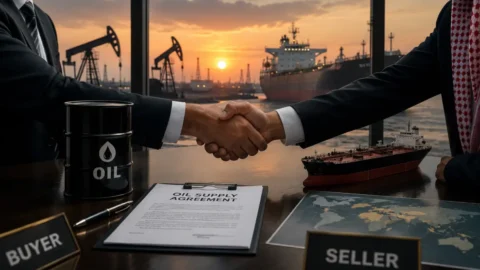
Wars and sanctions, reprimands and embargoes. Do they work? No. Despite the physical obstacles to gas pipelines crossing war zones and the demise of Russia's Nord Stream pipeline, which was blown up by maneuverers still well-hidden behind both Ukrainian and American interests, the European Union remains a significant buyer of Russian gas arriving via pipeline. And it is the main buyer of the gas liquefied by Putin and transported by ship. How can this happen? Simple: through hidden imports, but above all with a system of triangulations of all petroleum products: Russia sells crude or refined products to someone and this someone passes them on to us.
Data and methods emerge from the latest report, dated last July, released by Center for Research on Energy and Clean AIR (CREA). "The European Union," the report states, "remains the largest buyer of Russian LNG, accounting for nearly half, 49%, of Russia's total LNG exports." The remainder goes to China, with just over 30%, and Turkey (which, it should be remembered, has been a NATO member since 1952).
Considering the total amount of Russian energy resources last July, the European Union was the world's fourth-largest buyer, paying out approximately €1,5 billion to Russia. It's true that the lion's share of the expenditure went to the two countries that openly push European restrictions, confirming their acquiescence, if not closeness, to Russia: Hungary, with purchases worth just under half a billion euros, followed by Slovakia with approximately €300 million. But it's also true that approximately a third of Europe's total expenditure to Russia involves LNG shipments triangulated through traders and arriving in many countries along with other oil supplies.
Italy also participated in the game. With triangulation, precisely. Illegal triangulations with respect to the EU ban on imports of petroleum products derived from Russian crude oil, which came into force on January 21, 2026. Last July, CREA states in its report, 18 shipments of petroleum products were unloaded in European Union ports, including Italian ones. These shipments came "from refineries using Russian crude oil, identified as high-risk according to EU guidelines." This represents an increase from the eight shipments in June. Eight shipments came from Turkey, five from Indian refineries, and another five from Georgia. Among the ports reached by these shipments, according to CREA, are also Italian ones (unless the interested parties hopefully deny this), as well as Croatian, French, Greek, Dutch, and Maltese ports.
For Russia, an entirely internal oil crisis
Of course, a clear bottleneck has been in refined diesel fuel, the diesel fuel for our cars and trucks. Here, triangulations have done little to maintain a significant share of the approximately 30% of diesel we imported from Russia before the wars and embargoes, in a market that saw overcapacity in European refining, and also in Italy, in gasoline (which we have always exported, even to the United States), while diesel production has always been insufficient. And this is the reason for the increased tensions over supplies and prices, which are even now affecting Italian diesel more than gasoline.
Tensions will remain. Russia has in fact decided to extend its export ban on diesel, gasoline, and aviation kerosene, beyond the July deadline—currently until the end of August, but who knows what the future holds. This is to address the disasters caused by the Ukrainian attacks on its refinery and storage facilities. This bottleneck is causing a domino effect, with further tensions over availability and prices, shifting significant market share to supplies from the United States, fueled by demand from major buyers who traditionally sourced from Russia, such as Brazil and Turkey.
This is how the oil lords celebrate
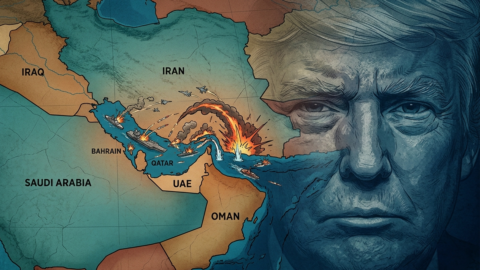
There are those who happily toast all this, we were saying in relation to tensions more on prices than on quantities, with strong suspicions of speculation. Last March FIRSTonline had already highlighted How Trump's America managed to rake in extra profits from LNG gas shipped to Europe to offset the supply crisis from the East, comparable to the cost of the war against Iran. A sort of improper "self-financing," in short.
The lid of the oil geo-pot was then discovered last April by analysts from Global Witness in a report published by the British newspaper Guardian, who now ups the ante with a new investigation really pungent, relaunched in Italy by the specialized portal QualEnergyIn the second quarter of this year alone, the world's eight largest publicly traded oil companies reported combined net profits of nearly $93 billion, compared to just under $50 billion in the same period last year. This is a jump of nearly 90%, which, according to the British newspaper's calculations, translates into over $700 in profits per minute.
The beneficiaries' company—it should be noted—is led by Saudi Aramco (the Saudi national company), with profits increasing by more than a third, reaching €33 billion. Not bad for the American companies ExxonMobil and Chevron, with profits doubling to $14 billion, respectively, while the latter posted $12.2 billion, quintupling its 2025 result. The others fared well, while Italy's Eni, according to the Guardian, had to settle for more limited growth: $1.4 billion versus $1,3 billion the previous year. Overall, overall capitalization increased to more than $3 trillion, representing an increase of approximately $600 billion.
In short, there's no shortage of meat on the fire for the debate over the appropriateness and feasibility of raising funds from a tax on oil companies' extra profits to at least partially offset the devastation caused by those very wars that fill some people's coffers.