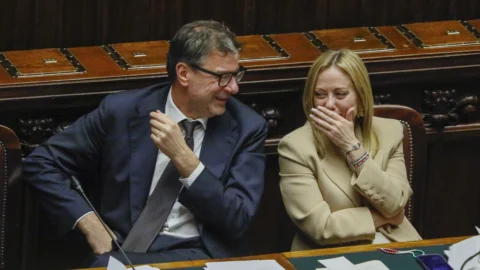
the construction site of the The 2027 economic plan is already open and, upon resumption in September, will enter the decisive phase. The requests of the ministries and the priorities of the majority parties are piling up on the table of the Minister of Economy Giancarlo Giorgetti, with a potential bill that could exceed the 30 billion eurosThe fifth and final budget law of the legislature will have to navigate particularly delicate terrain. On the one hand, the government wants to further address taxes, incomes, and labor; on the other, it must contend with European constraints and a long list of previously planned expenditures. The greater flexibility envisaged in the European budget for defense and energy could broaden the scope for intervention.
The political line indicated by the Prime Minister Giorgia Meloni revolves around three objectives"Reduce taxes, strengthen purchasing power, and promote increasingly stable employment." But internal debate has already begun within the majority over the composition of the budget, and it's set to intensify as the election deadline approaches.
From EU flexibility up to 35 billion in three years
One of the main variables of the next budget law concerns the possibility for Italy to use the national safeguard clause provided for by European rules. Rome is preparing to ask Brussels for a greater flexibility for approximately 35 billion in the three-year period, equal to 1,5% of GDP. European approval is expected this fall. At that point, the resources could be used through a budget adjustment that would require an absolute majority in Parliament. For 2027 alone, the additional margin is estimated at around €14 billion, although this amount could be reduced if Italy fails to exit the excessive deficit procedure. However, this would not be money that could be freely used to finance all the majority's requests. The resources tied to the European clause would, in fact, be allocated to defense and energy spending.
Specifically in the energy sector, the definition of the measures that will be included in the new regime is awaited. The trend is to allow interventions capable of structurally strengthening the security of the energy system, while temporary measures such as excise duty cuts and direct subsidies to families will remain excluded.
Irpef and employment are at the center, as healthcare seeks $5 billion.
On the tax front one of the most important political dossiers for the Government remains open, that ofIrpef on the middle classThe goal is to complete the tax reduction by targeting incomes between 50 and 60 euros, reducing the tax rate from 43% to 33%. The estimated cost of the operation is approximately 1,2 billion euros. This is complemented by the employment package promoted by Minister Elvira Calderone. The plan is to maintain the preferential taxation of contract renewals, performance bonuses, and allowances related to the most strenuous activities, for a total commitment of approximately 2 billion euros.
The bill rises rapidly when looking at other ministries. Health Minister Orazio Schillaci is aiming for at least 5 billionAdditional funds for healthcare, to be allocated primarily to hiring and salaries. Minister for the South, Luigi Sbarra, is instead requesting at least €4 billion over the three-year period to refinance the Special Economic Zone (SEZ) in Southern Italy. On the infrastructure front, Matteo Salvini is eyeing a package worth around €5 billion for roads and construction sites..
Then there is the pension issueTo prevent the one-month increase in the retirement age starting in 2027, approximately €1,1 billion would be needed. To these commitments must be added the non-deferrable expenses, estimated between €1,5 and €2 billion. Considering only the main requests already made, the requirement therefore exceeds €17 billion, even before all the majority's political demands are put on the table.
The bill could exceed 30 billion
The real problem of the maneuver will therefore be to to match political ambitions with the resources actually availableInitial estimates indicate an initial financial scope of around €15 billion, while adding together the requests made by the ministries, the fiscal interventions, and other priorities, the potential bill rises well over €30 billion.
European flexibility may make the budget law broader than those of previous years, but a significant portion of those resources will already have a predefined destination. To finance the remaining measures, the Government will therefore also have to consider spending cuts, bonus revisions, and new revenue. And it is precisely on the revenue front that the first policy proposals are beginning to emerge. Salvini he relaunched the idea of asking for a new contribution to the banking system, but concentrating the levy on the largest institutions.
"Let's make sure we intervene in the top 10 Italian banks, not in the hundreds of small local banks: we as the League will ask, and I'm convinced the majority will support us, for a three-year contribution to the top 10 Italian banks," the Deputy Prime Minister explained. The idea put forward by the League is a contribution equal to 5% of profits each year for three years.
The political game in the majority
The proposal on banks anticipates one of the tensions that will accompany the construction of the maneuverThe idea of a new contribution to the credit sector appears difficult to reconcile with Forza Italia's position, while the majority has not ruled out the possibility of asking institutions for a contribution to the coverage.
The real race for the budget bill will begin in September, when the priorities of individual parties will be added to the requests already presented by the ministries. Taxes, pensions, healthcare, Southern Italy, and infrastructure are set to become the main areas of debate.
The government starts with the promise to focus on income, purchasing power, and employment, but it will have to select the interventions and find the necessary funding. With a budget that could exceed €30 billion and a majority already projected towards the end of the legislature, the economic game this fall will be...