The fact that the digitization has pervaded the financial world, does not necessarily mean alone risks, but rather offers many opportunity prominent. It is necessary to distinguish, by promoting the virtuous ideas and watching over those that could harm the players in the sector. All while keeping pace with the complexity and speed of transformation that characterizes the digital world.
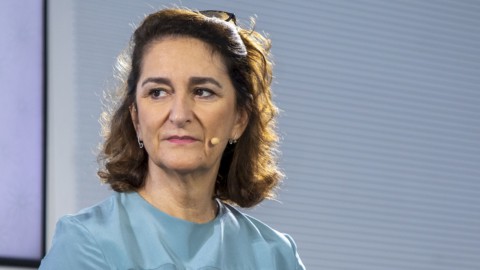
This is what emerges from the VIII lectio magistralis of the Italian Association for Financial Analysis (AIAF) "Digital innovation: challenges and opportunities for central banks" held by Alessandra Perrazzelli Deputy General Manager of the Bank of Italy.
“Our goal as Supervisory Authority and Central Bank is above all to support the development of a virtuous innovation in the Italian financial center that promotes integrity, transparency and inclusion, consumer protection and market stability” he says Perrazzelli. “Central Banks and Supervisory Authorities are observing how technological innovation has also affected the economic and productive sector as well as the financial one, and are monitoring the consequent challenges and opportunities".
Technological innovation creates opportunities, competition and cooperation
The digitization underway in the banking, financial and payments sector pushes towards profound transformations of consolidated paradigms: with new services and processes, with the entry of new operators such as “BigTechs” or small and agile “FinTechs” and with new value chains. This requires redesigning and developing safeguards, control systems, tools and approaches.
One of the most important corollaries of technological innovation in the financial sector is the reorganization of brokerage processes traditional that among other things brings with it new opportunities, also allowing for smaller intermediaries to remain on the market thanks to collaborations and partnerships with other, often non-financial subjects.
Furthermore, the presence of operators from economic sectors other than the financial one increases the competition, as for example in the payment instruments sector, on the other it favors new forms of cooperation especially on frontier issues, which require specialized skills such as artificial intelligence, the so-called technologies based on distributed ledgers (DLT / blockchain), the internet of things, biometric applications, quantum computing, etc.
"The interconnection between different subjects is the distinctive feature of digital finance that links technological components and operators belonging to different economic sectors, through different channels” says the Deputy General Manager who mentions outsourcing in favor of often large subjects that offer strategic partnerships and technologies, technological and network infrastructures, the development of services based on innovative technologies.
The absolutely necessary elements to be able to face any risks
However, one must be aware of the risks including business sustainability and business continuity profiles, IT security and dependency on suppliers in case of outsourcing. And on this path Bankitalia identifies elements absolutely necessary: from investments in new technologies, to product and process innovation, to the adaptation of the knowledge of managers and employees "There is still a long way to go, but the signals we perceive through our surveys and dialogue with the market they are encouraging” says the Deputy Director General.
The example of transformation in digital payments
In the field of payments, the use of cash is gradually decreasing in favor of digital services. In Italy, the ratio of the value of payments made in cash to total physical point of sale (POS) payments decreased by around 20 percentage points, to 49% between 2016 and 2022, and card payments make up just over 40 % of POS payments, taking into account that 92% of adults have at least one payment card.
The digital push is favoring the development of innovative channels, for example with mobile telephony and digital apps, with new business models based on "open banking" logics. Through them, new services are born, offered by specialized and innovative operators that join the traditional ones. It's just from yesterday the launch of Isybank, the new fully digital bank of Intesa Sanpaolo
“The development of services linked to “open models” favors an increase in competition, increases the level of overall efficiency of the system, allows companies to provide services designed on the specific needs of customers while guaranteeing a high degree of security” says Perrazzelli.
Open banking services are growing, according to data collected by the Bank of Italy, both in terms of number of subjects involved and volumes, so that the domestic market will be able to welcome the forthcoming legislative initiatives announced by the European Commission which provide for a review of the legislative framework relating to payment services and the application of the open model to other financial services as well.
Crypto-assets: it is necessary to distinguish the secure ones
Le crypto-assets while registering a growing interest, especially among the younger generations, it still has a limited diffusion. An experimental survey by the Bank of Italy showed that only about 6% of households hold crypto-assets with a limited amount held (two-thirds of households reported holding crypto-assets for less than €5000). Even globally, the diffusion of these instruments is still limited to only 1% of financial assets.
However, some are already emerging potential risks, for example according to the existence or otherwise of an intrinsic value. On the one hand, in fact, there are the so-called "unbacked crypto assets”, crypto-assets without a stabilization mechanism that anchors their value to a reference asset (Bitcoin). On the other hand there are the "asset linked stablecoins", crypto-assets backed by underlying assets (e.g. official currencies, credits, commodities) which aim to maintain a stable value with respect to a fiat currency (e.g. Euro), a specific asset or a pool or basket of assets. “Crypto-assets devoid of any intrinsic value cannot be suitable for performing a payment or investment function: for this reason, and for the risks that characterize them, their use should not be encouraged in any way” says the Vice General Manager.
The new Micar community regulation will arrive on June 29th
The Bank of Italy has been at work for some time now through communications to insiders to clarify matters, pending the entry into force of the Community legislation (MICAR regulation) the next 29nd June next year, with some provisions that will be applied in the second half of next year.
“The goal is to support development, in the context of the financial and payments system, of an innovation that favors integrity and transparency, consumer protection and market stability. We therefore intend to adequately monitor the risks that it may entail and encourage the dissemination of virtuous behavior and operating practices to the advantage of the economic system and the players that make it up: consumers, families, public administration bodies and, obviously, businesses"
Dialogue with the market is essential in order to be able to intervene
“I think the dialogue with the market is today a tool essential to understand trends and evolutionary perspectives, to know the rapid transformations in place in the financial system and to be able to intervene effectively and promptly as regulators and supervisors” says Perrazzelli. “In this context, extremely dynamic and rapidly accelerating, the Bank of Italy has accepted the challenges that innovation places before us and has taken on a role of catalyst to promote system solutions that favor the growth of operators and the development of good innovation, whose fundamental characteristics must be those of safety, inclusion, stability, sustainability and efficiency for the benefit of all stakeholders".
The facilitators of innovation already in action
In line with the best practices adopted internationally, three different and integrated ones have been developed over the last few years dialogue channels with the market: the Milano Hub Fintech Channel and the regulatory Sandbox, which constitute the "backbone" of the interaction between the Authority and the market, and are further tools in the public authorities' toolbox to encourage the use of new technologies by the financial system.
ll"FinTech channel”, active since 2017 on the Bankitalia website, responds quickly to the various needs of operators. Milan Hub is the space dedicated to the development of innovative projects in support of the country system in a "network" logic
La Sandbox regulatory, consists of a controlled environment where intermediaries and operators in the FinTech sector can test technologically innovative solutions. Together with other sector Authorities and under the coordination of the Ministry of the Economy, we have started work to simplify the regulatory framework in order to make the process of joining operators more flexible and streamlined
Benefits and risks of the digital euro
Also the theme ofdigital euro it is on the radar of the Italian Central Bank which also highlights in this case benefits and risks
“The potentials are different benefits, among these I would like to mention: the maintenance of public trust in the currency - in a context of progressive expansion of digital payments; the promotion of competition and efficiency in the payment services market, at a national, European and even cross-border level. This project, according to some evaluations, is however not free from risks for the disintermediation of bank deposits, for the cost and volatility of intermediaries' funding, for the transmission of monetary policy and for financial stability. These are risks we are aware of and on which we place the utmost attention and caution” says Perrazzelli.
The digital euro it would be a sovereign currency offered by the ECB in electronic form, usable by anyone – households, businesses, traders – to make or receive retail payments anywhere in the euro area. It would provide citizens with the same services they get from paper banknotes today, namely access to a secure, free, easy-to-use payment instrument that is accepted by all. The digital euro would complement the banknotes, without replacing them. It would allow citizens wider and easier access to electronic payments, promoting financial inclusion. Unlike cash, it could be used not only to exchange money between people or for purchases in shops, but also for online shopping. Being a liability of the Central Bank, the digital euro would have no risk – market, credit, liquidity – like banknotes.