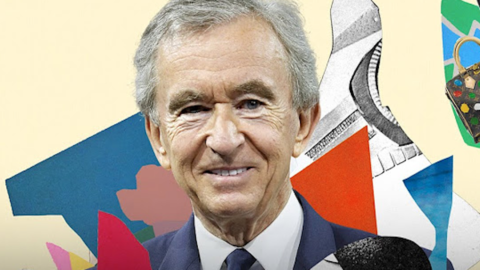
lvmh closes the first half of the year with signs of stabilization after difficult months for the luxury sector. The French giant led by Bernard Arnault recorded revenues of 38,6 billion euros, with a decline of 3% versus the same previous period on a reported basis, but with growth 2% organic.
The numbers confirm a transition phase for the world's largest luxury groupGlobal demand remains impacted by economic uncertainty, the slowdown in consumption in some strategic areas, and the normalization following the strong boom in the years following the pandemic. However, the results show a resilience that exceeds market expectations.
The most important data concerns the return to growth of some key divisions, particularly fashion and leather goods, the heart of the group thanks to brands such as Louis Vuitton and Dior.
Fashion and leather goods: the most watched sector returns to positive territory
The division Fashion & Leather Goods This was the main indicator of LVMH's health. After a period of difficulty linked to the slowdown in Chinese demand and the caution of international consumers, the sector recorded organic growth of 1% in the second quarter. This is a significant result because interrupts a contraction phase and signals a possible change of direction for the group's most profitable segment.
Louis Vuitton continues to be the main driver of the fashion industry, while Dior has been one of the areas under greatest attention investors after the sales slowdown seen in previous quarters. The recovery of the main brands is seen as the first step towards a new phase of expansion.
Operating profit at 8,7 billion and margins still solid
On the profitability front, LVMH recorded a recurring operating profit of 8,7 billion euros, down 4% compared to the previous first half. The most significant figure, however, is the stability of margins: the operating margin stood at 22,5%, one of the highest in the entire luxury sector.
In practice, the group continues to generate over 22 euros of operating profit for every 100 euros of turnover, demonstrating a strong ability to maintain profitability even during a period of slowing demand. Cash generation and a solid balance sheet also allow the group to continue investing in brand development, the distribution network, and production activities.
US growing, Europe and Middle East weaker
From a geographical point of view, the US market provided the most positive contribution to the half-year results. At the group level, LVMH recorded a 2% organic growth, supported above all by American demand, which offset the weakness of other strategic areas.
In United States Luxury goods consumption remained resilient, particularly supporting fashion, leather goods, and jewelry brands. The situation is more complex, however, in Europe and in Middle East, where the slowdown in consumption and a reduced push from international tourism have weighed on sales trends. China continues to be the main focus of the entire sector: after years of double-digit growth, the market is experiencing a normalization phase, with more selective consumers and a slower-than-expected recovery. Despite this scenario, LVMH has managed to limit the decline in consolidated revenues to 3%, confirming a good capacity to hold up in the main world markets.
Jewelry and watches among the most brilliant segments
Among the divisions that showed the best dynamics, the following stands out: Watches & Jewelry, which includes brands such as Tiffany & Co., Bulgari, TAG Heuer, Hublot and Zenith. The sector recorded a organic growth of 5% in the first half, proving to be one of the business units with the most solid performances in the entire group.
Demand for high-value products continued to support sales, thanks to the strength of the brands and the ability to attract a high-spending international clientele. The strong performance of this division helped offset the slowdown seen in other sectors, particularly fashion and leather goods, which nevertheless returned to growth.1% in the second quarterPortfolio diversification remains one of LVMH's key strengths, as it operates through six major divisions—Fashion and Leather Goods, Wines and Spirits, Perfumes and Cosmetics, Watches and Jewelry, Selective Distribution, and Other Activities—reducing its dependence on a single segment and strengthening its ability to navigate the different phases of the economic cycle.
The market is looking at a possible turning point
The overall reading of the results is positive but cautious. The half-yearly accounts do not indicate a new phase of explosive growth, but they show that the luxury slowdown may be nearing a plateau. The return to growth in fashion and leather goods, solid margins, and the contribution of the United States are encouraging signs for investors.
However, it remains essential to monitor the evolution of Chinese demand, the behavior of European consumers, and the group's ability to maintain high levels of profitability in a more competitive market. For LVMH, the challenge in the coming months will be: transform stabilization into a new phase of expansion, continuing to defend the value of its brands and its leadership in the global luxury sector.