At what age can our children access social media? No, it's not a mistake. This seemingly bizarre question was recently posed by the President of the European Commission, Ursula von der Leyen, completely overturning the question underlying the ever-increasing number of requests related to the use of social media. social networks by minor. Requests that in some cases have already managed to be transformed into law with access bans based on age (in Australia stop to under 16s while in France, first in Europe, no entry for under 15s). In others, they are in the process of arriving with widely announced timing (see theEuropean Union). In others still, they stagnate motionless in the usual swamp despite having moved well in advance: this is the case of theItaly.
And to think that the real mechanism of social media is now clear to many. And awareness is growing—along with concerns—in those families who long ago stopped considering virtual space shared with anyone an innocent pastime. Because it isn't. By wisely exploiting our dopamineSocial media doesn't entertain, it detains (scrolling is an addiction everyone can have), it captures data, influences behavior, and guides choices. Doesn't that seem like much? How can a child or teenager manage all this alone?
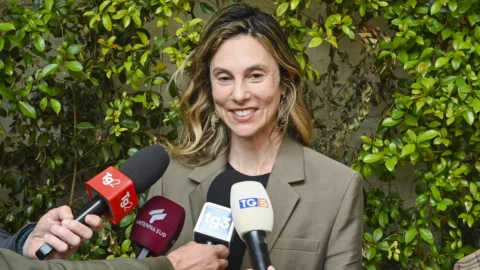
A FIRST online Marianna Sideboard he says it clearly: “Social media are invaded by children” who represent “a significant piece of turnover for social media platforms”. Taking them away would also mean significantly impacting their revenues. And it is with this interview with Madia, independent MP of Italy Viva, former minister with Matteo Renzi as Prime Minister and then with Paolo Gentiloni, first signatory in the Chamber of the Bipartisan bill for ban access to social media for those under 15, which here attempts to understand the scope of this bill and why Italy has not yet been able to bring it to fruition.
Marianna Madia, France beat us to the punch.
“The Italian Parliament started before France, and I want to point this out because, in terms of initial timing, it represents a plus for us.”
But then the process stalled and the PDL lost its way. Honorable Member, what happened?
“At the beginning of the legislature we had started the work in the Childhood and Adolescence Commission in an absolutely transversal way with Lavinia Mennuni by FdI. After a series of hearings with experts, we decided to present a proposal to introduce, by law, a minimum age for accessing social media. I insist that we wanted to introduce it 'by law' because the great paradox we find ourselves in is that today there is already a minimum age for accessing platforms – 13 – but the problem is that, since there is no law and therefore no responsibility for the companies involved, they are, in effect, content with an online self-certification in which the individual declares that they are over 13. And so, since social media is inundated with children, with many of them even acting as baby influencers, we are evidently living in a situation founded on lies.
The law would serve to sanction a socially reprehensible behavior fraught with consequences.
A law with a minimum age would also bring clarity and order. At that point, the platform would be required to verify. As for the consequences, science is now generally unanimous in believing that premature and uncontrolled use of social media is harmful to the physical and mental health of minors.
And had any feedback arrived from Europe?
"Not only had we started before France, but the discussions with the EU Commission had already been completed. This, in fact, is a sort of 'concurrent' matter since there is a European regulation called Digital Service Act (Dsa, ed) which regulates the issue. Member States are required, in fact, when attempting to legislate on this matter, to notify the Commission of the provision, hold a discussion with it, and allow a mandatory technical deadline, after which Brussels will decide which aspects need to be changed to harmonize everything that happens in the 27 countries on this issue.
But has this technical time come to an end or not?
"Yes, because the same bill was presented simultaneously to both the Chamber of Deputies and the Senate on May 13, 2024. Subsequently, the discussion began in the Senate. Shortly thereafter, the EU Commission immediately wrote to the first signatory, saying 'let's discuss it.' The discussions took place at the Ministry of Economic Development, and we finally arrived at the so-called 'second text.' All of this occurred in September 2025. So, by last fall, we were ready, after two hours of work in the Senate, to approve the legislation."
However?
But everything stalled. It must also be said that this is an easy measure to pass because it's supported by all the groups and—importantly—it doesn't cost anything. The problem is that the platforms don't want this measure, and according to press rumors circulating in recent months, it seemed that the government—specifically Prime Minister Giorgia Meloni—had asked for a slowdown on this dossier. And so it was, in the sense that the ministerial opinions never arrived. The PDL thus stalled.
If costs have nothing to do with it and the contents of the bill gain cross-party consensus, what's the problem?
"It's clear there are vested interests, given that social media is inundated with children and pre-teens: removing them would mean cutting into a significant portion of revenue. Especially today, the platforms' interests are aligned with the current US administration led by Donald Trump."
But there are also those who speak out against the law, using the "family" argument and insisting on the need to hold parents accountable, without resorting to laws.
I disagree because I certainly don't think a simple law is enough, obviously, this is a huge issue. But precisely because it's huge and we're facing a violent, aggressive force like the platforms, which is difficult for even adults to control, I think everything is needed. In other words, we also need a law.
A law that would perhaps help parents feel less alone in resisting daily pressures: if everyone has it, their children say, why not me?
"Of course. So much so that, little by little, many countries are getting on board. French President Macron calls this whole thing a 'movement.' A movement that also defines Europe's identity and says, 'Be careful, children's health comes before any company's revenue.' This law, moreover, has a double effect: the first is concrete; the second is signaling and cultural, a bit like the Sirchia law on smoking, which marked a watershed moment because it achieved effects that surpassed its mandate. The law bans smoking in public places, but today, even if you're at a private dinner, you're unlikely to have five people smoking all over you. And that didn't happen thirty years ago. I strongly believe that, given the emergency we're experiencing and along with many other actions, it would be necessary to legislate a minimum age for being in digital spaces."
The trickiest point, however, is the implementation mechanisms. How can we actually verify users' ages?
On this point, I think it will be necessary to gradually move toward a harmonized approach with all European countries. In our proposal, precisely because we've spoken with Brussels, we decided that the Commission will choose the European technical approach. France, however, has opted for another approach, probably to speed things up, given that the rule will come into force for new members on September 1st. Paris is telling the platforms, 'You have a thousand options, choose the one you like best, adopt one.' I believe that then, once Europe finalizes a common approach—Ursula von der Leyen has announced a package of targeted measures for the end of September—France will harmonize. We're currently in a gray area, but the real problem is that there's an emergency. The problems, in fact, aren't just the most extreme ones.
What does more extreme mean?
This means we're not just talking about children who, through social media, are leading to episodes of violence, depression, bullying, and eating disorders. The problem is physiological, that is, how premature use of these tools and scrolling are detracting from learning, concentration, and attention span, and how social media use is leading children to a much more sedentary lifestyle, with health implications. The problem is physiological; it affects everyone. And in this emergency, it's right, in my opinion, for individual countries to move beyond the technical approach. That's why I drew the parallel with the Sirchia law.
Age limit: Is 15 the cutoff point, or are there hesitations? And will parents be allowed to open an account on behalf of their minor, as is now the case in abundance?
We're actually discussing the age, whether to choose 15 or 14. Fourteen would be the age to harmonize the regulation with the AI law, and I'm open to discussion on this. But once the age is decided, there can't be, for example, an exemption that allows a parent to open an account in their child's name and then grant them access. There won't be one because it's a public health issue, not just a matter of parental freedom. The Italian Society of Pediatricians has now clearly stated that, under a certain age, social media use is harmful. At the same time, however, I want to emphasize that we don't place the responsibility for the lack of verification on the parents, which remains the responsibility of the platform. In this age we live in, and with the pervasiveness of algorithms, I think it's hard to say it's the parents' fault, because families are also helpless in the face of such a violent contemporary world that is bearing down on them.
And what about sharenting then?
“I don't agree with it and I think it's a phenomenon that needs to be controlled.”
It's not over. Some are also raising concerns about minors' privacy: how will it be possible to definitively verify their age without effectively "registering" them?
The DSA says that users under 18 cannot be profiled. However, this restriction isn't enforced at all. I agree that there's a privacy issue that shouldn't be violated, but I note that privacy is always invoked when there's a limit to be set—the law—forgetting that children's data is already being thrown to the platforms on a daily basis: in these cases, no one raises the issue.
But, in the end, could overtaking France be useful to Italy in terms of accelerating progress in the Chambers?
"I hope so. Meloni personally assured me she wouldn't obstruct Parliament. The problem is that, in our form of government, the Executive is not neutral. So, not obstructing Parliament also means allowing the ministries' opinions to be received, otherwise it means there's effectively a government blockade."
Yet these are issues that should be close to the heart of Education Minister Giuseppe Valditara, right?
Valditara has been declaring his support for it for months. As recently as Wednesday, after the French green light, I heard him say that in Italy 'the process of a bipartisan PDL has begun.' No, Valditara, the process began in 2024 and, I repeat, stalled in October 2025.
Just to give you some feedback: outside of Europe, Australia has already led the way by banning social media for those under 16. How's it going?
“I'm in contact with the Australian team, and we even held a seminar at Arel, inviting a lecturer who helped write the standard and continues to monitor it.”
There was talk of a flop.
"Is Australia a flop because 60% of under-16s are still on social media? No. Because, conversely, this same figure means that 40%, in just a few months and without sanctions, have quit social media. I repeat: we need a strong alliance between institutions, families, schools, and the media. There is no complex reform in the world that can eliminate such a widespread problem overnight."
He launches an appeal to ensure that Italy – and with it the approximately 7 million under-15s who populate the country – does not remain in the quagmire.
This is an issue on which we must take a stand. The Italian Parliament, across the board, has acted together, before any other European country. Now, however, France has reached the point of legislating, but Great Britain, Spain, Greece, Portugal, and Ireland are working on it—which will hold a conference. in September with experts from around the world, coinciding with the presidency semester. Well, I say: is it possible that the Italian Parliament, which started out in a serious and institutional manner, but also ahead of everyone else, must end this legislature, falling so far behind? My appeal is this: let's try not to experience this humiliation."