La crisis between Italy and Spain on border controls it doesn't close e now risks expanding to a new European frontWhile the checks introduced by Rome and Madrid in the main Italian and Spanish airports are proceeding without any particular problems, Brussels tries to lower tensions and calls on the two governments to bring the dispute back within the framework of European cooperation. But just as the Commission seeks mediation, another question comes from Berlin destined to complicate the Italian government's migration dossier. Germany would in fact be ready to resume from 19 August the transfers of asylum seekers to Italy andentered the European Union through our country, once again rigorously applying the Dublin rules.
A passage that opens a second front for Rome within a few days, after the clash with the government of Pedro Sánchez following the migration crisis in Ceuta.
Brussels tries to mend fences between Rome and Madrid
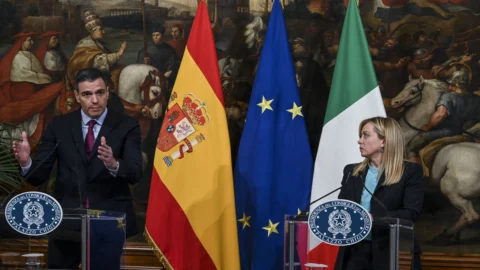
La European Commission The European Commissioner for Home Affairs, Magnus Magnus, is following with growing attention the standoff between Rome and Madrid, which erupted after Italy's decision to temporarily reinstate controls on air and sea connections with Spain and the subsequent response of the Sánchez government, which introduced similar checks on passengers arriving from Italy. Brunner had interviews with Interior Ministers Matteo Piantedosi and Fernando Grande-Marlaska, receiving confirmation from both that the measures are temporary: “Trust among Member States is our most precious resource,” underlined Brunner.
Brussels wants to avoid that the bilateral dispute could create a new rift in the Schengen areaAccording to the Commission, the Spanish authorities have also assured that the developments in Ceuta will not have lasting consequences for European freedom of movement. At the same time, Italy has signaled the possibility of lifting controls as soon as the identified security risks have subsided.
For now, however, neither government is backing downSpain has imposed controls until September 7, while Rome continues to consider a return to normality premature.
On the operational level, the impact on travellers has been limited so farAt Spanish airports, checks are conducted on a random basis on approximately 5% to 15% of passengers arriving from Italy. At Fiumicino Airport, checks on third-country nationals arriving from Spain are also carried out selectively, based on passenger lists and information available in databases.
Tajani defends controls, raising concerns about a new wave in Ceuta.
Rome, however, continues to consider the risk of new arrivals through CeutaForeign Minister Antonio Tajani called Spain's reaction "incomprehensible" and "unacceptable," accusing Sánchez of "dramatizing" a measure required by European regulations: "According to Spanish intelligence, there is a risk of a new wave by mid-August: not lifting the measure is a precaution. We hope to be able to lift the suspension soon, as soon as the risk is no longer present," the Deputy Prime Minister explained.
The central point for the Italian government remains that of the possible secondary movements migrants who cannot be directly repatriated to Morocco. Ceuta is not part of the Schengen area, but Spain is, and Rome fears that some of those who entered the enclave may subsequently attempt to reach other European countries.
According to information reported from Madrid, of the approximately 72 migrants who arrived by land or swimming at the end of July, approximately 70 have already returned to Morocco. The president of the autonomous city, Juan Jesús Vivas, maintains, however, that between 8 and 11 people remain in Ceuta and is calling on the central government to strengthen security and repatriations.
The situation is also made more delicate by thetraffic alert on social media with messages that would invite people to organize new attempts entry in the coming days. According to an intelligence dossier, the online mobilization could be "directed by a campaign," which has not yet been attributed to a specific individual. The services are reportedly monitoring Facebook groups, TikTok groups, and WhatsApp chats used to coordinate new departures and which could also be exploited by "human traffickers." The report also warns of the risk that Ceuta could become a place of "radicalization and jihadist recruitmentMadrid has meanwhile strengthened its security system with a floating barrier of about 500 meters, two frigates, about two thousand soldiers and increased deployment of the Guardia Civil and Policía Nacional. Matteo also Salvini attacks Madrid again"When we protect our borders, we defend those of the entire continent. Italy is doing so, Spain is not," said the Deputy Prime Minister and Minister of Infrastructure.
Berlin reopens the Dublin dossier, with the first transfers to Italy starting August 19.
While Rome and Madrid discuss border controls, pBut another front is opening up for the Meloni government on migrant management.
Secondo Republic, the German government led by Friedrich Merz would be ready to resume the transfers of the so-called "Dubliners" to Italy, that is, asylum seekers who entered the European Union through Italian territory and subsequently moved to Germany.
Il first case is expected for August 19th and would concern a 22-year-old Somali citizen who arrived in Germany in March after entering the Union through Italy. The point raised by Berlin concerns theapplication of the Dublin Regulation, which generally designates the first European country of entry as the state responsible for examining applications for international protection. Since December 2022, Rome had essentially halted the resumption of asylum seekers transferred to other European countries, reinforcing migratory pressure on Italy. At the end of 2025, an agreement between Rome and Berlin had allowed the backlog of cases to be resolved, but Germany believes the situation has now changed with the implementation of the new European asylum rules. "A functioning Dublin system is a prerequisite for the success of the European Asylum Reform (GEAS)," explained a spokesperson for the German Interior Ministry, who said Berlin expects transfers to Italy and Greece to resume.
The German position concerns in particular asylum seekers arriving in 2026, for which Berlin intends to demand strict application of European rules. The total number of people who could be transferred to Italy is not yet determined and, according to the German ministry, will depend on several factors. The decision, however, raises a sensitive issue in relations between Rome and Berlin, just as the Italian government is engaged in a clash with Madrid.
From Ceuta to Schengen, the migration crisis becomes a test for Europe.
The story that arose in Ceuta is as follows widening the front involving Italy. The clash with Madrid over border controls is now compounded by tensions with Berlin over the transfer of asylum seekers. It is on these two fronts that Brussels is trying to keep the countries involved together, insisting on the need to preserve trust between Member States and to avoid a chain of national initiatives that would end up weakening Schengen.
On the ground, at least for now, the The diplomatic clash did not produce the feared chaos in the connections between Italy and Spain.Checks remain "random" and the situation at airports appears to be normal. Politically, however, the debate is far from over. Feriae Augusti will be the first real test: by August 15th it will be clear whether the alarm about a new wave of arrivals in Ceuta has been followed up and whether Rome will be able to begin evaluating a loosening of the measures. Immediately after, the August 19th, a new step with Berlin is expected, along with the planned resumption of transfers to Italy of asylum seekers subject to the Dublin rules. These two closely spaced dates could mark the evolution of a crisis that originated in Ceuta and has now become a broader test for European immigration policy, Schengen, and cooperation between member states.