Double standards (from lobbies?). While Italy and Hungary receive a firm no to ease the constraints on the energy efficiency of homes, which will impose huge costs In addition to the need to adapt to the needs of private citizens, pressure is growing in Brussels to accommodate the demands of the auto industry and its substantial support policy, effectively canceling the total shift to electric cars already announced for 2035.
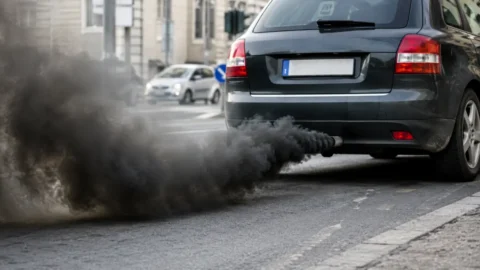
The possible, indeed probable, innovations? No definitive constraints on internal combustion engines, with a much more lenient limit on CO2 emissions for means of transport. This limit could be achieved, as an alternative to the use of electric motors, also by using increasing shares of vegetable or synthetic fuels, in addition to an environmental certification of the materials used to build them, starting with steel. This is making its way revision draft of the regulation on CO2 emissions, edited by MEP Massimiliano Salini, vice-president of the Forza Italia party of the European People's Party, with the open support of all the centre-right political groups in the Union.
Loose sleeve on new environmental credits
The document, which proposes to cancel the decline of thermal engines by granting the automotive industry rather permissive quotas of credits The proposal for "green" emissions, to be achieved through the use of alternative fuels and environmental certifications linked to materials, is expected to be formalized on Tuesday, June 2, by the European Parliament's Committee on the Environment, Health and Food Safety.
In practice, this is a further increase more permissive of the alternative strategy to all-electric vehicles that had already been passed through Brussels' hands. This included a 3% threshold for eligible green or synthetic fuels to counteract all-electric vehicles, while in the Salini draft, the limit is more than tripled, to 10%. This limit would be added, through a mechanism yet to be refined, by a further 7% commensurate with the use, in building new cars, of steel produced using less polluting technologies, but also with the use of other recycled materials for non-metallic parts. The overall limit of the flexibility would therefore grow from 3 to 17%.
The new mechanism of the Salini draft, if it were to actually be approved, would allow producers to reach the new environmental objectives with a production mix of electric cars, hybrid cars (especially in the controversial “plug in” configuration) and a significant portion of cars with a normal internal combustion engine, even if these would still remain subject to the increasing emission limits reached at the Euro7 stage (EU Regulation 2024/1257).
The doubts, the controversies, the controversial points
There are some unclear points in the potential new regulation. From a reading of the document, it would appear that the use of the new environmental credits would be granted in an initial phase following the entry into force of the new regulation, with an advance payment mechanism starting in 2028, rather than in 2035, with a gradual advance payment starting in 2030, as previously assumed. Even more controversial is the rapporteur's proposal to consider the new environmental credits as zero emissions even those internal combustion engine vehicles powered “exclusively by synthetic or biological fuels”.
A proposal justified in the name of "technological neutrality," a principle that is absolutely acceptable if correctly applied, but in this case, it is clearly at odds with reality. It's difficult to imagine, at present, a heat engine configured to run on clean fuel that cannot run on a traditional fuel, either entirely or even simply with a mixture between two.
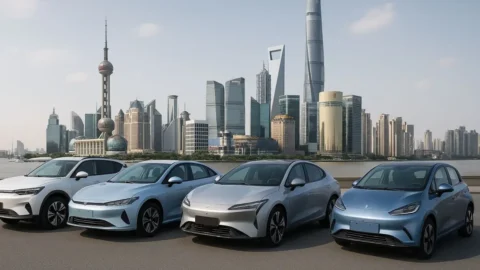
Hence the harsh criticism not only from environmental associations but also from analysts specialized in the sector. Among them, those of Transport & Environment (T&E), the independent transnational organization for the decarbonization of transport. In practice – warns Andrea Boraschi, director of T&E Italy – we are moving towards a neutralization of commitments by 2035, which would also cause significant economic damage to the electric car sector compared to the investments already planned, quantifiable according to the organization at approximately 200 billion euros, "with the concrete risk of seeing European electric car and battery production halved by 2035 compared to the forecast." This stalemate would block projects worth 600 gigawatts (GW) and the production of 7 million vehicles, with potentially serious damage to the entire Western automotive sector. This strategic shift would, in fact, leave "China in control of the affordable electric car segment."
This is also detrimental to individual citizens, the organization insists, comparing the costs of using HVO vegetable fuel, which would have an estimated average cost of 13 euros in the EU and 11 euros in Italy to travel 100 kilometers, compared to an estimated average cost of seven euros, which in Italy becomes 7,4, to travel the same distance by charging an electric car.
The position expressed by Unem is of a completely different nature,Energy Union for Mobility, the former Petroleum Union, which explicitly represented Italian oil companies. President Gianni Morano supports the Salini report, citing technological diversity and the use of alternative fuels to ensure security of supply and the economic sustainability of the transition.