Natural gas from the Northern Adriatic? Croatia takes it all, or almost all. With a mockery, but certainly not through deception. If anything, with a scathing implicit warning about our energy suicide. The supposed environmental and ecological damage blocking new Italian extractions? It'll be our turn, if there's any. The business? All theirs. It's happened before, in fact. Now the new assault. Everything hinges on the borders, on extraterritorial waters, on the significant "pockets" of methane that lie beneath the waters and can be tapped from both sides. And there you have it. Again, more than before.
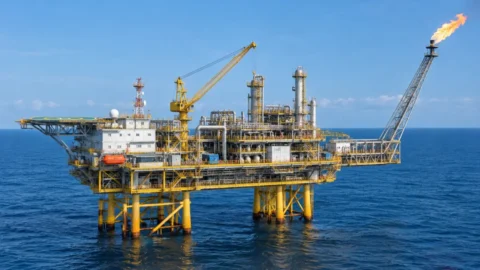
The news is circulating these days, spiced up with many controversy, in the media of the North East. This time Croatia is really serious: with gas that is ideally cohabiting with us, it wants to double its methane production in the border marine areas to cover at least 20% of the national demand by extracting almost 900 thousand cubic meters of gas. It promises to do so with five new wellsThe first, called Ana-4 DIR, had actually already been set up with a pre-testing operation and is already in production with immediate success. It extracts 155 thousand cubic meters of gas per day and has immediately proven to be the most productive in the whole of Croatia. But the one potentially richer, Irena 3, will be the closest to Italy, off the coast of Pula, 80 kilometers from the coasts of Veneto and Istria. It is estimated that it could deliver as much as 300 cubic meters of gas per day. Which could, as one might expect, fuel not their own, but our energy system.
A lot of courage and highly profitable investments
The Croatian operation is being handled by the state energy company INA, which has a significant stake in Hungary's MOL, and has approved a modest initial investment of €65 million. The aim is to complete the entire package of five new wells. by 2029.
Anyone in Italy who would rely on regrets has good reason to flagellate themselves. Or rather, to flagellate those who have manipulated and continue to manipulate our energy policy. In the new geopolitical energy scenario, Croatia is in fact deploying a growing number of methane infrastructures open to continental markets, starting with the liquefied natural gas (LNG) terminal in Krk, which not only serves the national market but is interconnected to the national grid. interconnections pan-European. In short, Croatia is becoming what had been theorized for our country by the true strategists of energy policies, too often unheard: a continental hub of gas. With related deals that could significantly ease the burden large bill Italian energy.
A challenge not yet lost. Italy still has the advantage.
In reality, we still have time, or rather, we still have time. We have plenty of LNG regasification plants: after decades of struggle with local communities, fueled by political propaganda, we now have five, producing nearly 30 billion cubic meters of gas per year. The pipeline Tap (Trans Adriatic Pipeline) which brings us the methane from Azerbaijan crossing Puglia to go North, after years of torments and unfortunate oppositions is working and indeed promises to double its capacity from the current 10 billion cubic meters per year.
But what if, to ensure Italy a worthy energy future, alongside a new and necessary development of renewables, we started here? That is, from operations to our reach and can be seen within a horizon of a few months or at most a few years, instead of relying only on the daring suggestions of a "new" nuclear who knows when it will come?