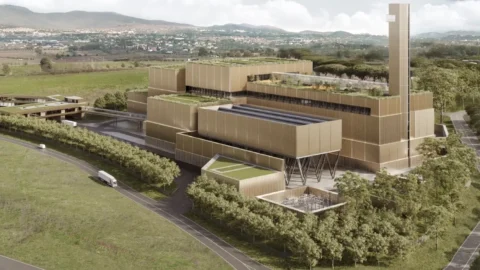
RenewRome ha green financing of 1,058 billion completed of euros for the construction and management of the new waste-to-energy plant in Rome, which will be built in the Santa Palomba area. The transaction, underwritten by the company and its shareholders – Acea Environment, Suez Italy, Kanadevia Innovates, Via Panini Works e Rmb – is structured as a long-term project financing and represents a key step in the development of the infrastructure.
The financing has a duration of 19,5 years and is part of a concession with Rome Capital lasting approximately 33 years. Once fully operational, the plant will be able to treat approximately 600.000 tons of municipal waste per year, recovering energy from waste that cannot be further recycled. The project envisions a net production of 530 GWh of electricity per year, an amount equivalent to the needs of approximately 200.000 families. The goal is to help strengthen the capital's energy system autonomy and make waste management more efficient, reducing the need for disposal and valorizing the non-recyclable component.
“The completion of this operation represents a fundamental milestone for RenewRome and for the construction of the waste-to-energy plant in Rome”, declared Barbara Macconi, CEO of RenewRome, added that "the successful financing, made possible by the trust of Sace and 17 leading national and international financial institutions, confirms the project's solidity and its strategic value for the region." Maccioni also emphasized the infrastructure's contribution to building a more efficient and circular waste management model, with benefits for the environment and citizens.
The structure of financing and the role of banks
The operation was structured with the support of Intesa Sanpaolo, through the Imi Corporate & Investment Banking Division, as financial advisor, and heritage as legal advisors, who assisted RenewRome and its shareholders in the various phases of the project.
The financing is configured as a green loan, in line with the Green Loan Principles of the Loan Market Association (LMA), and benefits from an Archimede guarantee issued by Sace on the project's long-term debt.
The first subscription involved bbva, Cassa Depositi e Prestiti, Intesa Sanpaolo, Mufg Bank, Company Generate e UniCreditThe subsequent syndication led to the entry of another eleven institutions: Bper Corporate & Investment Banking, Banco bpm, Monte dei Paschi di Siena Bank, Santander Cib, Medium credit Centrale, KfW Ipex Bank, The Postal Bank, Piraeus Bank, through the Frankfurt branch, Banco Sabadell, Alpha Bank ed Eurobank Private Bank Luxembourg.
Intesa Sanpaolo and BBVA acted as green loan coordinators, while UniCredit acted as agent bank, custodian bank, and hedging coordinator.