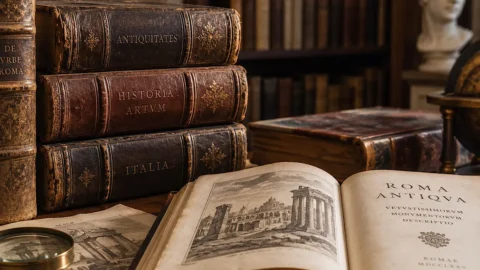
It's an administratively necessary step, but culturally far from neutral. Because BiASA is more than just a specialized library: it's one of the places where, for generations, the history of Italian studies on archaeology and art history has been built. Founded in 1875, the Library has gradually amassed a wealth of books, periodicals, documents, and iconographic materials of extraordinary value, including particularly significant documentary collections such as the archaeologist's collection. Rodolfo LancianiToday it is recognized as a specialized public library of national reference for archaeology and art history. For this reason, the door that closes today at Palazzo Venezia is not simply that of a reading room. It is the door to a place where the library's heritage has, over time, acquired a precise historical and identity-building dimension.
The new season of Palazzo Sanfelice
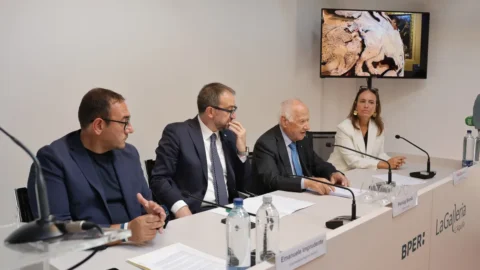
The move also stems from the need to overcome the limitations of the current spaces. Palazzo Sanfelice, made available by the Presidency of the Republic, is intended to reunite BiASA in a larger location, more suited to the contemporary needs of conservation and research. The project includes approximately 6.500 square meters, almost double the space currently available, approximately 14 kilometers of shelving and a 350-seat auditorium. The restoration project was designed by the architect Mario BottaIt is therefore a gamble on the future: concentrating in a single location a heritage that is currently scattered, increasing the available space, and creating more suitable conditions for research, consultation, and conservation. But every future, especially when it concerns such stratified cultural institutions, also brings with it a question of memory.
What happens when a library leaves the place where its identity has been embedded for decades?
The answer can't be merely architectural. A library is made up of shelves and catalogs, but also of habits, encounters, silences, and daily journeys. It is a community of readers and scholars even before being a collection of books. Palazzo Venezia has represented all this for generations of scholars. Palazzo Sanfelice must now become something more than a new headquarters: it must become the new home of BiASA.
A closure, but not an interruption
During the closure period, activities will not be completely suspended. To ensure continuity of work for students and scholars, the reproduction and delivery service will remain active, and may be expanded where necessary and within the limits established by law. Requests can continue to be sent to the Library at [email protected]The reopening date has not yet been announced: the administration has specified that information will be released as soon as the State Property Agency determines the timing of the operations. The transfer, therefore, begins today. But its true conclusion will only come when BiASA reopens its doors. At that point, it will no longer be the Palazzo Venezia library. It will be the Palazzo Sanfelice BiASA. And it will be then that we will understand whether the move will simply mean moving a library, or reshaping one of the great cultural infrastructures of Italian research. Because a library, when it moves, does more than just transport its books. It transports its memory. And with it, the vision of the future that a city chooses to entrust it with.