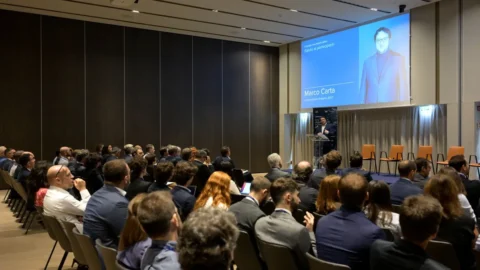
We need new laws in favor of women in the companies, beyond “glass ceilings”. This is the warning from the Consob commissioner, Gabriella Alemanno, who spoke today, Monday 4 March, at the opening of the conference “Crystal ceilings and rubber walls. Female leadership and ESG mission". The event was held this morning at Consob in Rome in view of Women's Day on March 8th.
Commissioner Alemanno has no doubts: "it is necessary to evaluate the hypothesis of a new regulatory intervention that will stimulate the improvement of the presence of women in companies even where the regulatory constraint does not exist today" as in the world of companies not listed on the stock exchange. The debate is heated, considering the crucial role that gender equality can play in the growth and sustainability of companies. There readers Gulf-Moscow has borne fruit, but the "rubber walls" are still holding back.
The challenges of gender equality in businesses
The legislative intervention of the Gulf-Moscow law, which promoted gender balance in the corporate bodies of listed companies, has already achieved results significant. Starting from 2011, when the legislation was introduced, the presence of women has risen from 7% to 43% on the boards of directors and to 41% on the supervisory bodies of listed companies, as indicated by the latest Consob data.
However, the commissioner highlighted that although the “glass ceilings” at the top have been shattered, “rubber walls” still persist at lower levels of organisations. These barriers, often invisible but limiting, hinder the full valorization of women and their abilities, slowing down efficiency and innovation.
He then underlined thepositive influence of female presence in companies' decision-making processes, leading to improved performance and greater attention to environmental and social issues. These aspects, increasingly crucial for investors, could be the push to extend the positive experience of listed companies to unlisted ones too, with the implementation of new specific regulations. Furthermore, he shared the importance of access to venture capital for companies, as a gateway to visibility, financial growth and competitiveness.
As for interventions to simplify women's approach to the world of work, Alemanno said "I am thinking, for example, of leave, the nursery bonus, the single universal allowance and the recent measure introduced by the Government, the so-called mother bonus , which consists of an exemption from contributions for working mothers, a bonus paid directly to the paycheck".
Finally, Alemanno also underlined a broader problem: "from a more general profile, women, in addition to having little presence in top positions, are over-represented in sectors that pay lower wages and are often hired with part-time contacts." time (the incidence of part-time work is close to 50% among women, and in many regions of the South it exceeds 60%. INPS data)”.
A framework that highlights the need for structural interventions to guarantee real equality of opportunities.