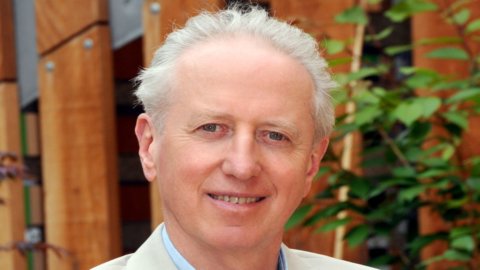
Finance, public health and the environment must communicate. Economic tools and sustainability interventions could be very effective and effective in the short, medium and long term. On these highly topical issues, especially after the Coronavirus tsunami, here is an extensive interview that Sir Andy Haines, internationally renowned professor at the prestigious English University of Public Health The London School of Hygiene and Tropical Medicine, granted to FIRSTonline.
Sir Haines, during this outbreak we have seen how political leaders' perceptions of risk to public health issues have changed rapidly. Within two weeks, world leaders quickly recanted their responses to an emerging life-threatening risk. We went from a “do nothing / business as usual” scenario when the virus was not affecting their country to “take all necessary measures” as soon as the number of deaths increased. Do you think this experience can teach us something about the timing of the political response to the risk associated with climate change? Or do we recognize the risk when it's already too late?
“Probably this experience teaches us something. In the beginning, many people, particularly in the Western world, were not very aware of the risks of COVID-19 and reacted very slowly. The case of Asia was different: in Taiwan, Singapore and Korea the response was different. Probably because in Taiwan, for example, the vice president is an epidemiologist. Also in Singapore they have a very strong public health system and it is easier to control what the population does. They were much more aggressive in looking for the first contagion, they had experienced SARS, so they were clearer about the risks and responded quickly. In general, Asian countries have reacted much more effectively, while in the West the opportunity to identify the first cases has been lost, countries have not prepared, convinced that the health system was strong enough to deal with the virus. However, things have changed and people are now controlled in Europe. The politicians were late perhaps because they took the time to convince the public that it really was an emergency.
Climate change and environmental change have a very different time scale, we are talking about years and decades (not days or weeks), but the principle is the same: we must respond quickly, because if we respond in advance, risk reduction costs they are not excessive. If instead they are addressed as an emergency, the impact will be much greater”.
Don't you think Taiwan is comparable to Australia? After six months of fires should they be more ready or more sensitive to these problems?
“Australia is an interesting case. They experimented with it, but it didn't affect climate policy much, because of the government in power. They are only doing the bare minimum on climate change, because they have focused on economic growth, with no understanding of how it is affecting the future."
What do you think of the situation in Europe? For example, Austria, Germany and the Netherlands, where there are right-wing parties but also green parties that have a fairly large consensus.
“I'm a bit skeptical about talking about this issue as 'political'. These policies need support from a broad consensus, otherwise they cannot be implemented, they will always be rejected. However, it is difficult to coordinate with right-wing parties, although green, center and traditional parties are not without problems either. Greens, in my opinion, don't always do a great job. Think of Germany where as far as I know the green party supports some measures that are really wrong (use of coal and others). Of course, they don't fear the arrival of a tsunami”.
Do you think young people can play an important role in this scenario?
“Yes, absolutely, because the new generations are sensitive to these problems and much more educated than us. They see their future destroyed, they have a voice and at the same time they can convince adults to take action. We need positive politics that say this is the vision: what kind of future do we want? Clean, green economy. This must be the society we will live in."
Regarding the consequences of the COVID 19 epidemic on pollution, we have observed a drastic drop in emissions due to the lockdowns. But as the following figure shows, all economic crises have been followed by a sharp increase in emissions associated with lower hydrocarbon prices. Will this also happen with this pandemic or have the rules changed and cleaner energy sources been adopted?
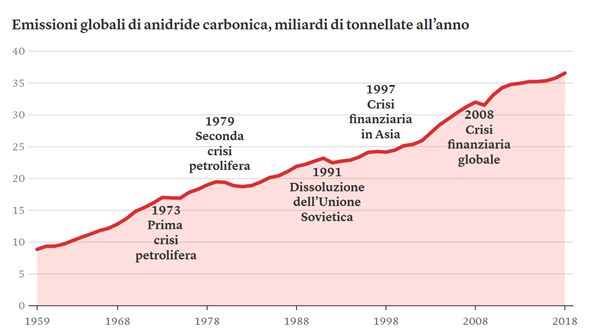
“The danger is that investment in renewable energy will decrease due to the economic downturn. Buying coal and oil is cheaper and the prices are actually already very low. I'm really worried. We cannot be complacent, of course we would like to see a low carbon response, but I think there will be a great danger, unless we put policies and economic tools in place now."
Let's talk about the relationship between disease and pollution. Are there diseases for which it has been shown that the level of pollution of the air, land or water is a relevant factor? AND regarding the COVID 19 pandemic, it is true that air pollution is a vehicle of the virus and may have been a factor influencing the higher number of cases in Northern Italy than in the South, where the secondary and tertiary sectors are generally less developed?
“Many people are studying it right now, such as Professor Piscicelli for example. It is currently unclear whether air pollution is a channel of transmission of COVID 19 or has an impact on its severity. It is possible that it is. Long-term we already know that air pollution increases the risks of heart disease and chronic lung disease: it attacks our lungs, in a different way than Covid 19, but it does. In the short term, if it matters because COVID 19 is carrying particles we don't know, we're not sure. However, what we do know is that if we reduce air pollution, there will be a huge health benefit, especially if emissions levels stay low for a long time. New evidence shows that air pollution is probably more harmful than we previously thought. We know that if we emerge from the COVID emergency with a low-carbon economy and renewable energy sources, it will benefit everyone's health, so this is another reason to do it."
Let's go into detail on the relationship between emissions and health consequences. By tackling the emissions that cause climate change, would we also reduce the negative health effects associated with air pollution? Are the pollutants that affect health and the climate the same?
“When fossil fuels are burned, carbon dioxide and other greenhouse gases are produced, but also pollutants that damage our health. In particular, fine particles damage health in several ways: they increase the risk of many diseases, such as chronic pneumonia, heart disease and lung cancer. Reducing the use of fossil fuels reduces air pollution which could prevent about 3 million premature deaths a year. There are also other sources of air pollution related to human activity such as agriculture and the burning of solid fuels in homes. If all human activities linked to the causes of air pollution are eliminated, approximately 5,6 million premature deaths are avoided. The number of deaths varies from country to country, depending on the amount of pollution present locally, but all countries are interconnected.
So will reducing air pollutants that affect health also reduce climate change-related pollutants?
“Not because they are the same pollutants, but because when we stop burning fossil fuels we stop producing carbon dioxide which is the main greenhouse gas and remains in the atmosphere for around 2000 years. We are studying how to prevent it, obviously planting trees is a good thing but it takes time. At some point, economic growth will stop, it's inevitable, it won't be infinite. What matters to me is human beings and health and we need a sustainable economy. The energy required to extract resources is increasing more and more, because we already extract the "easy" part, and we have to go deeper and deeper. At some point we will have to stop. We need the Circular Economy and it will also be necessary to work on transport: electric cars, hydrogen cars, bicycles. For the latter, there will be a need to invest in safe routes and reduce the related mortality rate".
Thinking about some possible solutions, how can we reduce the consequences of the economic recession and fight climate change? In a recent article titled “European Green Deal: a major opportunity for improving health”, you mention the need to develop financial instruments to reduce emissions. Many financial instruments that aim to fight the economic recession are currently under discussion, but none of them mention climate change. Can economists, epidemiologists and public health specialists collaborate to develop economic aid capable of fighting the recession and tackling climate change at national and/or European level? There is currently a proposal made by four leading economists, including Professor Marco Pagano of the Federico II University of Naples, which suggests a two-stage approach called the COVID-19 LIQUIDITY LIFE-LINE. On these bases, can we add a further element to select/request the commitment of companies to recapitalize and what can it be?
“I deal with Health Economics. From this point of view, the decarbonisation of energy sources is very important. Let's assume that the goal is to reach completely decarbonised systems in 10-15 years, to get there it is also necessary to work in terms of transport and supply chain. This is what is happening with our national health system, they want to decarbonise in the next few years and their strategy is to decarbonise the supply chain by reaching agreements with medical equipment companies and others, so that it is not just the system that decarbonises healthcare but also its energy suppliers with an enormous potential multiplier effect. Because as the number of those who no longer buy products increases if the company does not also decarbonise their energy supply, this could constitute an effective and exponentially better means of fighting climate change every year. Also, the cost of renewable energy is decreasing.
We must emphasize that companies are not paying the full economic cost of their product. So the only reason they have this business model is because they can avoid paying externalities. They're not only cheating the environment, they're harming people's health. Let's think about our economy: we subsidize what actually harms our health”.
You are referring to progressive taxation. At the moment, for example in Italy, we subsidize diesel. How do you think this subsidy can be removed to ensure that the weakest groups do not suffer from it?
“What could be done is to recycle the subsidy, take it away and give it back in terms of tax cuts for the poor, and raise the threshold over which taxes have to be paid, so the cut goes back into people's pockets. Another thing that could be done is to subsidize what the poor need, such as converting fossil fuel subsidies into health subsidies. In Indonesia, they remove fossil fuel subsidies and give them to the health system. Another example of what poor people need is healthy food: fresh vegetables. By subsidizing fruit and vegetable production, they can buy more of these kinds of things. There is an interesting study on this. Each company can subsidize according to its needs, with a public debate on what should be done”.