A 190 billion euro industrial plan and 40 new hires in 10 years, with a peak in the three-year period 2024-2026, is not an event that happens every day. Indeed it is a fairly rare fact and not by chance only the first major Italian investor, which has been for years Group of the Italian Railways, could launch it under the leadership of its new CEO, Luigi Ferraris. Needless to deny that, especially in times of war and in a country that has not yet fully recovered from an epochal pandemic, the numbers are impressive. But perhaps even more striking is the philosophy that underlies the new Business plan 2022-2031 which can be summed up in two words: vision and concreteness.
The new Plan of the FS: vision and concreteness
In a country like Italy which over the years has culpably sunk large companies, how many are there that not only invest a lot but above all express a long-term vision without aiming solely at short-term profit? Few, very few. But together with the vision and desire to accelerate the investments in the FS Plan there is the concreteness that distinguishes a manager from Lombardy by birth and Ligurian by adoption like Ferraris who not by chance explained, in yesterday's presentation, that one of the objectives of the new Plan is "to give greater certainty to the execution of the works within the foreseen times” without forgetting the preventive financial coverage. Promising is easy but delivering is much less so. But the track record of Ferraris, manager appointed to lead the FS by Prime Minister Mario Draghi, is a guarantee that the new Plan is not an illusion Dream book. The results achieved by the CEO of the Fs in his previous experiences at Enel, at the Post Office (where he worked on the company's listing) and at Terna prove it. But be careful: Ferraris has always worked in large public groups but as a good democratic Catholic he knows the ethics of responsibility and knows that wasting public money would be an even greater sin than in a private group because not only the resources of the shareholders are at stake – in this case represented only by the Treasury – but by taxpayers. And this is why in his corporate philosophy efficiency is not an end in itself but is anything but an optional.
High-speed rail has changed the lives of Italians and now excelling abroad is a source of pride
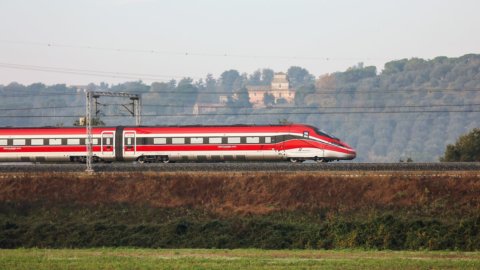
As Napoleon always said, a general must be good but also lucky to win battles. And Ferraris, beyond his qualities, has the good fortune to inherit a Group that is not even a distant relative of the money-sucking bandwagon it was before becoming a joint-stock company. A group that throughHigh speed, conceived by a visionary manager like Lorenzo Necci and created by an unnecessarily grumpy but very efficient manager like Mauro Moretti, has literally changed the lives of Italians. This cannot make us forget the backwardness and slowness of many local and regional trains - on which the Regions often turn their heads - but it is a sign of a changing reality. As is the growing presence of the Fs on an international level, of which the recent debut of Frecciarossa 1000 on the Milan-Paris route it is a symbol of pride. The new Piano Ferraris rightly aims to reorganize ea strengthen the international presence of the Fs with an eye also to Spain, but it must be recognized that if twenty years ago they had told us that Italy could excel in rail transport throughout Europe, we would have laughed or we would have thought that we were not on earth but on the moon.