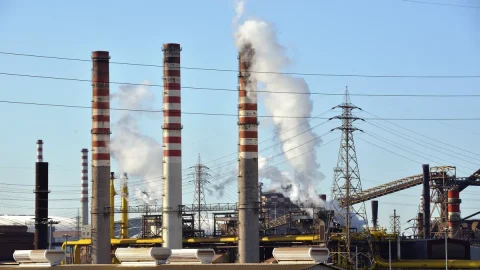
Those are expensive visits - well-wishing, of course - those taking place in these days at the former Ilva in Taranto. Potential future buyers are studying the historic establishment to organize yet another relaunch. Vulcan Green Steel, a company of the Jindal giant, and Steel Mont were the first companies to face the Apulian reality, who knows how aware they were of the expense to be incurred in order not to definitively close the plant.
The future of the Italian steel industry is now concentrated in Taranto and following in the next few days there will also be a visit from the managers of the Ukrainian Metinvest group. For now the interest in the former Ilva seems only foreign, even if there is no shortage of rumors about a possible evaluation by the Italian Arvedi. The Metinvest group, however, would seem to be the solution that best meets the expectations of workers and unions (in part). The most impactful costs for the relaunch of Taranto always concern the environmental plan. In campaign so little has been said about it that one can deduce that the fate of Taranto is so frightening that ministers Urso and Pichetto Fratin are repeating the same things as three months ago. Yet there is an electoral pool of thousands of votes and the next European Parliament will find the Taranto issue on the table.
Plant super observed for health
Among the possible buyers, Metinvest already has a kind of Italian credential, as it is committed to investing 2 billion euros on a green site in Piombino. The decarbonisation of Taranto continues to be proclaimed by the government, but finding a partner before July, as it had implied Adolfo Urso, at the moment, it seems difficult. The blast furnaces are turned off while the procedure for the activation of the 320 million euro bridge loan remains open. Meanwhile, environmental impacts are kept under control by the new permanent health observatory. The structure will periodically publish scientific data, will listen to citizens, associations and experts from the Istituto Superiore di Sanità.
It is clear that all potential buyers will have to take into consideration the emission aspects of steel production in order not to get into legal trouble as happened with the administrators of Arcelor Mittal. The possibilities of produce steel without damage to the environment and public health are contained in dozens of documents against which many millions of euros must be paid. The exit from extraordinary administration passes from here. And what can happen for employment, investments and exports is a scenario that is only half imaginable today.
The extraordinary commissioners – Giancarlo Quaranta, Giovanni Fiori and Davide Tabarelli – they told the unions who are not convinced of the validity of the latest one business plan. Production is at a minimum and in the difficult search for a new industrial entity the unions feel more guaranteed by the presence of the State. Italy is still the second largest steel producer in Europe, however without an entrepreneurial initiative, including a political one (the money that the State puts into it), without new technologies and low impact energy sources, the plant remains exposed to health risks, seizures , disputes, warranty notices. A game that the government can lose outright.