In Italy they were officially just over 200.000 cases diagnosed, but in reality one can reasonably think that people affected exceed 600.000 unit. It is the world of celiacs, victims of an insidious disease that only came to light a few decades ago thanks to the greater awareness and knowledge of the pathology on the part of the medical profession, and the availability of increasingly sensitive and specific, and at the same time less invasive, diagnostic tests.
Put simply, celiac disease is one The immune reaction to gluten intake is therefore a chronic pathology autoimmune disease that causes an immune reaction in the body when gluten is eaten: a protein complex found in many cereals, such as barley, wheat and rye.
In celiac subjects, eating gluten triggers an immune response that affects the small intestine; the persistence of this response it produces an inflammation that damages the fundamental structures of the intestine small intestine, the intestinal villi, causing them to flatten and consequently an inability to absorb nutrients (malabsorption). Intestinal damage can cause weight loss, bloating, and sometimes diarrhea. Malabsorption of vitamins and trace elements in particular can cause damage to various organs, including the nervous system, bone, reproductive system, blood system. There is no cure for celiac disease, but following a strict gluten-free diet can help manage symptoms and promote intestinal healing.
The Dove, a symbol for Christianity but also for the Greeks and Assyrians
Holiday celebrations, when the family gathers all together around a table to celebrate and meet again, they become torture for many. It's okay to deprive yourself of chocolate pralines. puddings and desserts, jellies and candied fruit, mousses, panna cotta and spreadable creams. But at Easter the opening of the dove is the moment of propitiatory rite of the table that refers, in the iconography of Christianity, to one of the three expressions of the dogma, impersonating the Holy Spirit and in the biblical tradition to the symbol of the reconciliation of men with God when he returns to the ark with an olive branch after the Great Flood. Testimony of purity and salvation in the Catholic tradition, of goodness and righteousness in the common traditional culture but also considered full of meanings for the Assyrian people who considered it personification of the soul of Queen Semiramis and for Greek goddess Venus.
Countless legends have arisen gastronomically around the origins of the Easter dove but in reality its birth is much more "prosaic" and without great auras of mystery.
The brilliant intuition of Motta's advertising director in the 30s
It was there brilliant intuition of Dino Villani, Motta's advertising director, that in the 30 years invented it for amortize the costs of a considerable investment made by the company to produce its famous panettone at Christmas. He therefore devised a new dessert, to be made with the same dough as panettone, but in the shape of a dove and to be sold at Easter. He designed the entire advertising and packaging line and also conceived the claim that would accompany the launch of the new dessert: "Motta Easter Colomba, the dessert that tastes like spring".
So why keep people with celiac disease away from this little bit of good things?
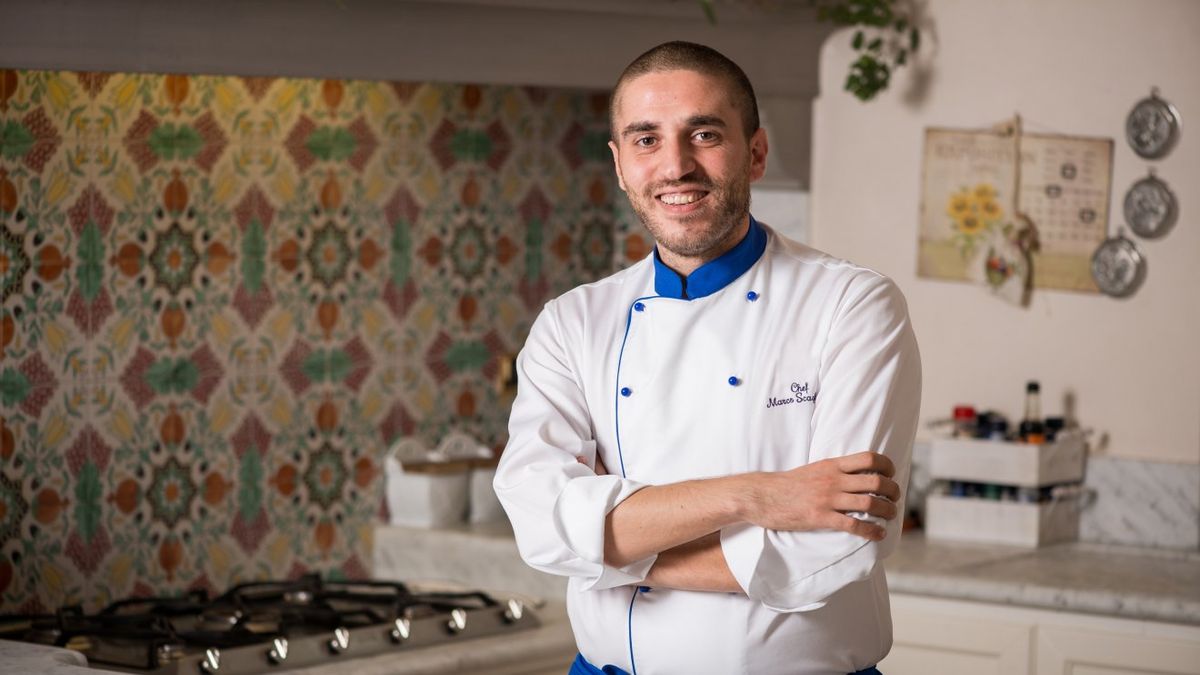
Lo comes to their rescue and for the readers of Mondo Food Chef Marco Scaglione, twice winner of the AIC gluten-free haute cuisine trophy (Italian Celiac Association), author of several publications on cooking and intolerances; contributor to industry magazines, consultant e teacher at cooking schools, hotel institutes and private individuals.
Marco Scaglione has been carrying out a constant search for Italian and European gastronomic tradition for years, and he refers to local products to bring out the regional typicalities. Last but not least, the young chef, Sicilian by birth but Tuscan by adoption, has been dedicating years to the Saharawi project, a study and assistance program for the population of the Saharawi desert area on the border between Mauritania, Morocco and Algeria where there is one of the highest prevalence rates of celiac disease in the world: 5,6% against the average of 1% in other countries. The program promoted by the Italian Celiac Association offers help to patients, family members and doctors who did not have the tools and knowledge to deal with this pathology.
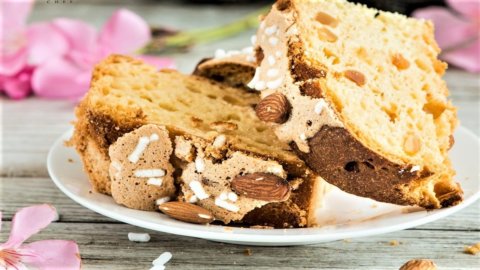
In short, a real one authority on cooking for celiacs. And Scaglione offers Mondo Food readers the recipe for a gluten-free Easter Colomba so as to allow everyone to celebrate Easter lunch in the most classic of ways without depriving themselves of the pleasure of respecting tradition with a beautiful Colomba.
The recipe for traditional gluten-free Colomba
Ingredients for 1 kg
For the poolish
100 g Gluten-free mix for Molino dalla Giovanna leavened desserts
130 g water
8 g fresh yeast
For the dough
250 g Gluten-free mix for Molino dalla Giovanna leavened desserts
230g poolish
100 g water
8 g fresh yeast
130 g sugar
260 g whole egg
50 g lactose-free butter
60 g Sunflower oil
120 g gluten-free sultanas (California or Australian)
70 g candied orange (Cesarini or Agrimontana)
30 g acacia honey
1 bourbon vanilla pod
the zest of a grated lemon
1 g baking soda
1 g fine salt
For the frosting
100 g egg white
80 g almond flour
50 g gluten-free icing sugar
40 g gluten-free rice flour
20 g potato starch
2 g gluten-free bitter cocoa powder
For decoration
50 g whole almonds
50 g medium gluten-free granulated sugar
Process for the glaze:
To be prepared two hours in advance. Mix all the ingredients in a bowl and create a smooth and homogeneous dough, leave to rest for two hours in the fridge.
Procedure for preparing the poolish:
pour 100 g of mix into a bowl and add the water in which the yeast was previously dissolved, then mix everything well, kneading by hand directly in the bowl.
The dough will be smooth and creamy, leave to rise covered with plastic wrap for 4/8 hours in the fridge.
Fit the k hook in the planetary mixer and insert the mix together with the flavourings, sugar and poolish, mix everything for a couple of minutes (the result will be a crumbled dough).
Dissolve the yeast in the water at room temperature and add to the powders together with the whole eggs (be careful to insert them slowly) and continue to knead the dough for at least 5 minutes until it is free of lumps, then add the oil, the honey, the salt, the bicarbonate and all the flavourings, only finally the ointment butter.
Let the dough complete until it is creamy and smooth, it will take about 20 minutes.
At this point in the final part of the dough add the raisins and candied fruit and work by hand with a spatula from the bottom up to give a final mix to complete.
Transfer the dough into a piping bag and fill the 500 g molds for each dove with 650 g of uncooked bread per piece.
With the previously prepared icing, cover the surface of the doves evenly, add the granulated sugar and the almonds and let the leavening start, which will last about 2 hours.
At the end of this rest, cooking involves heating the oven to 195°C, then cooking at 175° for about 25 minutes in a static oven, they must take on colour.
After the first twenty minutes of cooking, lower the oven to 140° and cook for another 20/25 minutes.
Once these two times have been completed, remove the doves from the oven and leave to cool for about an hour by inserting them with a few skewers and turn them upside down in a bowl, leaving them to cool completely upside down.
Once cold, be able to serve.
For an ideal conservation, close tightly in a food bag.