Hard times for those seeking a balance between denial environmental and just fight against pollution and climate change. Because the confrontation between different theories is accompanied by a less noble competition of nonsense on both sides. Even the referee, namely the institutions, is no stranger to this. The latest glaring example comes from the regulation of waste-to-energy plants. These plants emit copious amounts of CO2 and other pollutants and must be stopped, say many environmentalists. On the contrary, advocates insist, comforted by the scienceThe balance between pollution generated and pollution avoided is clearly in favor of the latter. But Europe is ultimately responsible for the mess.
The EU remains formally committed to its environmental policies. It strenuously resists calls to soften the implementation of the mandatory ETS mechanism, which provides for the costly exchange of emissions-related certificates as an alternative to the expected hefty fines. And it hasn't budged a single step on the planned obligations for green homes. But it has also given in significantly on the program to replace internal combustion engine cars with electric ones starting in 2035. This is aobvious contradiction. To which an even more serious and obvious one is now added: the regulation on waste-to-energy plants. Specifically, the extension of the ETS system to these plants, which recycle waste by reusing the abundant energy they produce.
Europe's rigid position in refusing to weaken the ETS system is absolutely understandable, as it is considered crucial to discourage polluting activities in favour of investments in more environmentally friendly alternatives, but for these very reasons the extension of the ETS system to waste-to-energy plants appears objectively counterproductive and it's meaningless.
A new threat to an already difficult challenge
Waste-to-energy plants require great efforts to stem the rejection of many self-styled environmentalists, and in any case huge costs to build them. And here's the new problem: the extension of the ETS system to these plants, already desired by Europe starting in 2028 with Directive 959/2023, now confirmed despite calls for a reconsideration, could undermine the economic sustainability of the operation. The accusation, with figures in hand, comes, among others, from UtiliItalia, the federation representing Italian companies dealing with the environment, energy, and water.
According to Utilitalia, the extension of the ETS system to waste-to-energy could in fact expand costs Operating costs of a medium-to-large plant could reach up to €350 million per year, seriously jeopardizing the financial viability of this solution. This is due to an increase in the waste disposal fee of approximately €45 per ton, resulting in an increase in operating costs of approximately 20%.
"The potential inclusion of waste-to-energy plants in the ETS system," explains Roberto Tasca, Utilitalia's vice president for European Affairs, "would risk producing counterproductive environmental effects. In the absence of technologically sustainable alternatives for treating the non-recyclable fraction of waste, an increase in costs would ultimately favor the recourse to landfills, which today represent the main source of emissions in the sector, responsible for 64% of the sector's greenhouse gas emissions". "Waste-to-energy plants – insists Tasca – currently constitute the most efficient, safe and sustainable solution for the management of waste that cannot be recycled. In a context already marked by theplant emergency and the lack of landfills, a regulatory measure of this type would risk causing concrete damage to the environment, as well as determining an inevitable economic burden for citizens and businesses."
The case of the "model" plant in Rome
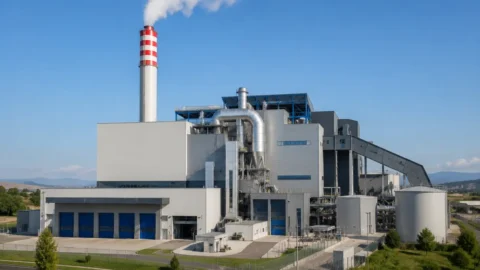
A case in point? Here it is, just south of Rome, where the Santa Palomba waste-to-energy plant is being built after years of struggle, conflict, and delays. The first stone was laid at the end of May by Rome's mayor, Roberto Gualtieri, and the CEO of the city's energy company, Acea, Fabrizio Palermo. With a tribute to promised benefits from the plant, which has mobilized investments of one billion euros and which will be, they promise, a "reference model".
Starting in September 2029, when the facility opens, 600 tons of unsorted and non-directly recyclable waste per year will be transported at night on the railway tracks. To reassure the public, there will be a large park and a panoramic tower. Meanwhile, a €31 million road and transport infrastructure plan will more than offset the additional traffic, easing—they promise—the entire area. TRAFFIC of the quadrant south of the Capital.
A model of energy efficiency recovery, they insist. A plant PV It will cover all surfaces and will complement the energy production capacity, which will reach the equivalent of approximately 540 megawatt-hours (MWh) annually. A district heating network will allow this solution, which is still not widespread in our country, to be tested in neighboring residential and industrial areas. There will also be an experimental system, not only for recover the ashes heavy (however imposed by the regulations) but also for the capture and storage of Co2.
The financial balance? They will be secured, the architects promise. Although it's unclear whether the bill includes the new ETS charges threatened by Europe. In any case, considering the environmental impacts, the savings, compared to the current landfill charges, are evident. The deliveries to the Santa Palomba plant will prevent 24 truck trips each year for waste transport to plants not only in Northern Italy but also abroad, at least partially remedying a dark page in our environmental management. Penalizing all this with the ETS "tax" seems objectively a culpable contradiction.