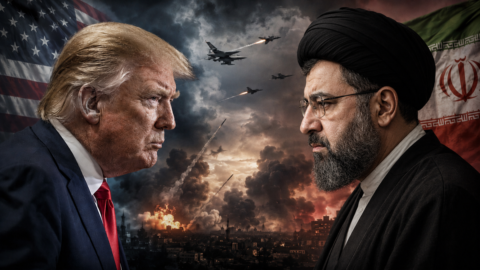
The conflict between the United States and Iran is reigniting with force. Tehran has declared the memorandum of understanding lapsed reached with Washington in Islamabad, while Supreme Leader Mojtaba Khamenei accused Donald Trump of having betrayed the commitments made and promised the United States “unforgettable lessons”.
The American response was not long in coming. After the death of two US soldiers in an Iranian attack in Jordan, Trump ordered a new wave of bombings against targets in Iran. Meanwhile, the conflict is spreading to the Gulf countries that host American military bases and facilities, which have become targets of Tehran's attacks.
Khamenei breaks the agreement and challenges the United States
A week after the collapse of the truce, Iran announced the suspension of the commitments contained therein in the agreement signed in IslamabadDeputy Foreign Minister Kazem Gharibabadi confirmed that Tehran had stopped implementing the memorandum, formally opening a new phase of the conflict. Shortly afterward, Khamenei Jr. intervened, who accused Washington of repeatedly violating the agreementAccording to the Supreme Leader, America's actions would have demonstrated "how useless the signature of the President of the United States is."
In his harsh message, Khamenei defined "bullying, hegemonic ambitions and barbarism" as inseparable elements of American policy. He then promised that Iran will teach the United States “unforgettable lessons”, arguing that Washington has once again shown “its true unmasked face.”
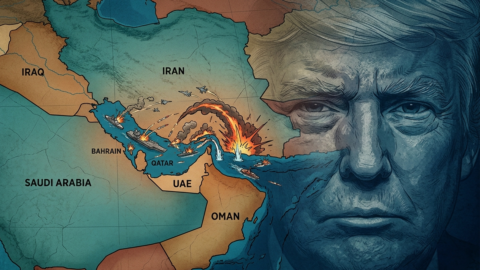
The Iranian threat is no longer limited to American soil. Attacks against US installations in Jordan, Kuwait, and Bahrain indicate that it also the countries that host Washington's bases, radars and contingents they risk being dragged directly into the war.
Two American soldiers killed in Jordan
The escalation was accelerated by the Two US soldiers killed in Iranian attack in JordanAnother soldier is missing, while four were injured and were later discharged from the hospital. With these new victims, the total number of casualties rises to 16 is the number of American soldiers killed since the beginning of the conflict. U.S. Central Command has not released the names of the two soldiers, pending notification of their families.
Trump called their deaths "a very sad thing," explaining that the military was operating "in service of our country." The American president then reiterated that the primary objective of the intervention remains to prevent Iran from acquiring a nuclear weapon.
Asked about Tehran's decision to abandon the Islamabad agreement, Trump responded without diplomatic overtures: "I couldn't care less."
Tehran strikes US bases in the Gulf
Iran has intensified attacks against the American military presence in the regionIn Kuwait, Iranian forces claimed responsibility for a large-scale drone operation against Camp Al Adiri and Ali Al Salem air base. According to Iranian state television, an ammunition depot, Patriot systems, and air defense radar equipment were hit. Tehran also said it targeted a U.S. military support center at Camp Arifjan.
The attacks also impacted civilian infrastructure. Kuwait International Airport temporarily suspended operations due to the threat posed by missiles and drones. The Kuwait Petroleum Corporation also announced that one of its oil facilities had been hit by "repeated Iranian attacks," resulting in significant damage and several injuries. The Iranian military also claimed responsibility for a drone attack on a US base in Bahrain. Tehran's strategy thus appears to be aimed at increasing the cost of the conflict by targeting the network of installations through which Washington supports its operations in the Gulf.
Trump orders eighth night of bombings
The United States responded with a new series of raids against Iranian territoryCentcom announced that the operations were launched "at the direction of the commander-in-chief" to punish the Pasdaran forces believed to be responsible for the attack in Jordan.
The targets included coastal surveillance facilities, air defense systems, naval vessels, and missile and drone depots. Washington explained that the strikes also serve to reduce Iran's ability to threaten commercial traffic in the Strait of Hormuz. According to Iranian media, US missiles struck electrical infrastructure, desalination plants, bridges, and road links in the southern province of Hormozgan. At least two dozen villages were reportedly left without drinking water. Iranian state television reported three deaths and eight injuries.
Explosions were also reported in Bandar Abbas and on Qeshm Island, two strategic areas near the Strait of Hormuz. While Washington is strengthening its military presence with new F-16s and F-35s, theThe State Department has issued a global alert, urging American citizens abroad to exercise greater caution.