La fiber optic network can become much more than ainfrastructure for transmitting dataIt can protect sensitive communications, host computing power close to users, predict traffic peaks, detect ground vibrations, and contribute to the management of energy communities. This is the perspective that emerged from the six projects developed by Open Fiber in the context of Restart, the national research program on the telecommunications of the future funded by the PNRR.
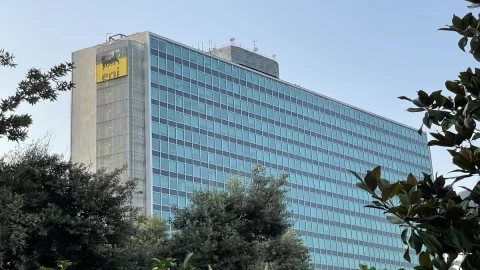
The results were presented in Rome, at the company's headquarters, on the occasion of the conclusion of the program's reporting phase, which ended on June 30. Restart was able to count on total resources of 116 million euros, funded by the European Union through NextGenerationEU, and involving universities, research centers, foundations, and businesses. From the initial 27 partners, the number has grown to 135, engaged in 32 projects dedicated to next-generation network technologies and applications.
Open fiber participated in three structural projects and three focused initiatives, investing €1,75 million in research, testing, personnel, and outreach. The work has led to the development of 22 demonstrators and proofs of concept, as well as 25 scientific publications.
Quantum security and micro-data centers within the network
A significant part of the experiments concerned the security and the ability to process data directly in the network nodes. With the Rigoletto projectOpen Fiber has been working on optical architectures designed to support future 6G infrastructures. In collaboration with the Polytechnic University of Milan, an experimental system consisting of four nodes connected in a ring was created, used to test quantum key distribution. The technology allows cryptographic keys to be distributed using quantum principles and could find applications in protecting communications for banks, public administrations, large companies, and strategic infrastructures. The objective of the experiment was to verify the possibility of integrate these systems into traditional optical networks, without having to create completely separate infrastructures.
Il Peach project Instead, it focused on edge computing. Two have been developed “Data edger” prototypesMicro-data centers that can be installed within existing fiber optic network nodes. By bringing processing and storage closer to where data is generated, these facilities can reduce response times, reduce consumption, and make advanced cloud services available even far from major technology hubs.
On the front of the network managementThe "Beyond the gigabyte: data analysis for traffic management" trial, conducted within Net4future, used predictive models to simulate traffic patterns and identify abnormal peaks in advance. This capability could allow operators to intervene before congestion or disruptions occur, thereby improving investment planning.
“The research has allowed us to verify in the field how a network created to transport data can become a platform for new services”, stated the CEO of Open Fiber, Joseph GolaAccording to the manager, the next challenge will be to transform the most promising solutions in scalable applications, capable of increasing infrastructure efficiency, reducing costs and opening new markets.
From the smart grid to earthquake-detecting fiber
Among the most innovative projects is Graphics, born from an idea by Open Fiber and coordinated by the Federico II University of Naples. The initiative led to the creation of a remotely controllable optical switch based on graphene and amorphous silicon. The device was designed to make PON network configuration more flexible, limiting manual intervention and reducing operating costs and energy consumption.
Even wider is the Sensing net potential, a project proposed and coordinated by Open Fiber itself. Experiments have demonstrated that existing telecommunications cables can also function as distributed sensors, capable of detecting vibrations and mechanical stresses across the territory. Tests conducted in the Milan area involved buildings and infrastructure, while in the Phlegraean Fields, the technology was tested to identify seismic activity and evaluate its use in early warning systems. The same approach could be extended to monitoring railways, roads, highways, pipelines, and civil engineering works, leveraging an existing network without having to install new dedicated sensors everywhere.
The fiber also enters in the energy sector with Telesmeg, a project that combined optical connectivity, 5G, cloud, edge computing, and artificial intelligence to improve the functioning of renewable energy communities. The trial, conducted in the Bergamo area, involved homes, offices, and electric vehicle charging stations, organized into a residential community and a business community. During the observation period, 3.199 kWh of energy was produced, of which 1.329 kWh was shared among participants. Seventy-one percent of the electricity fed into the grid was used within the community. The results demonstrate how intelligent data analytics can promote self-consumption, better coordinate production and demand, and contribute to the stability of future smart grids.
With the conclusion of the reporting phase, Restart now enters the most delicate stageThe tested technologies will have to leave the laboratories and transform into industrial services applicable on a large scale. Fiber, in this perspective, will not only be the backbone of digital connectivity, but also asecurity infrastructure, distributed computing, land protection, and the energy transition.