we receive e we publish the following press release issued by Pirelli.
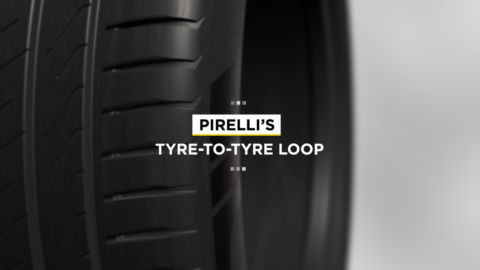
Pirelli, Pyrum, Synthos, and BASF are launching a joint tire-to-tire circular economy initiative in Europe, promoting the development of an industrial ecosystem aimed at increasing the use of recycled materials derived from end-of-life and waste tires.
The process starts with the collection of used tires in Germany from some Driver network outlets and motorsport activities, as well as production waste collected at the Pirelli plant in Breuberg. These materials are treated through an industrial supply chain designed to maximize their intrinsic value, transforming them into secondary raw materials – including synthetic rubber – certified according to the ISCC PLUS scheme. This certification guarantees traceability along the entire value chain and allows these circular materials to be reintroduced into the production of new Pirelli tyres, ensuring their highest standards of quality and performance.
As part of this process, Pyrum converts end-of-life and waste tires through a pyrolysis process – the thermal decomposition of materials at high temperatures in the absence of oxygen – obtaining two secondary raw materials: recovered carbon black (rCB) andpyrolysis oil (TPO). The recovered carbon black It is further processed in terms of quality and reintroduced directly into Pirelli's European production, partially replacing virgin carbon black.
In parallel, pyrolysis oil is supplied to BASF, where it is used together with fossil-based raw materials in the production processes of chemical products such as butadiene and styrene. Through an approach mass balance, recycled content is attributed to ISCC PLUS certified Ccycled® products. These circular materials are then used by Synthos to produce ISCC PLUS certified synthetic rubber for high-performance tire applications. Pirelli subsequently reintroduces this synthetic rubber into its production processes, thus completing the cycle.
The project fully reflects the principle that product circularity cannot be achieved by a single company acting independently. Instead, it is necessary to create industrial ecosystems that involve stakeholders with complementary skills, each engaged in the different phases of the transformation process within a shared materials cycle. Through collaboration and the combination of technological innovation, materials science, and certified processes, the partners, led by Pirelli, have achieved a coordinated system in which materials are recovered, transformed and reused, maximizing their intrinsic value.
The European “tyre-to-tyre” project represents the most comprehensive application of this approach to date, demonstrating how end-of-life tyres can become a valuable resource within a structured and fully traceable industrial cycle.
Pirelli
Founded in Milan in 1872, Pirelli is a leading player in the tire industry and the only global manufacturer focused exclusively on the consumer tire market, which includes tires for cars, motorcycles, and bicycles. Thanks to its distinctive positioning in the High Value tire segment, the Group is a global brand recognized for its cutting-edge technology, high-level manufacturing excellence, and strong commitment to innovation, rooted in Italian tradition. Pirelli's technological excellence is also fueled by the innovation and expertise gained in motorsports, a field in which the company has been active for over 115 years. Pirelli currently participates in over 350 automotive and motorcycle racing events and has been the Global Tire Partner of the Formula 1™ World Championship since 2011.
Pyrum
Pyrum Innovations AG has revolutionized the end-of-life tire recycling market. Since 2008, the company has been developing an innovative thermolysis technology that allows for the recycling of end-of-life tires and plastics with virtually zero emissions. The process recovers high-quality products, such as pyrolysis oil and recovered carbon black (rCB), which are used by leading partners to create new products. In this way, the company closes the material loop and pursues a sustainable business model, in line with climate objectives. Prestigious certifications, such as REACH and ISCC PLUS, attest to the quality and sustainability of its products.
BASF
At BASF, we create chemistry for a sustainable future. Our ambition: to be the chemical company recognized for facilitating our customers' sustainable transformation. We combine economic success with environmental protection and social responsibility. The approximately 95.000 employees in the BASF Group work on contributing to the success of our customers in nearly all sectors and nearly every country in the world. Our portfolio includes the Chemicals, Materials, Industrial Solutions, and Nutrition & Care segments as core businesses, while our standalone businesses are in the Surface Technologies and Agricultural Solutions segments. BASF generated sales of approximately €60 billion in 2025. BASF shares are traded on the Frankfurt Stock Exchange (BAS) and as American Depositary Receipts (BASFY) in the United States. Further information is available at www.basf.com.
Synthos
Synthos is Europe's leading synthetic rubber manufacturer, the world's leading producer of solution-bonded styrene butadiene rubber (SSBR), and Europe's leading producer of expanded polystyrene (EPS). With its own synthetic rubber production technologies and ISCC PLUS-certified solutions, Synthos helps tire manufacturers meet increasingly demanding performance requirements while promoting the use of certified raw materials from circular supply chains. The company's portfolio includes synthetic rubber, insulation materials, dispersions, adhesives, and crop protection products. Synthos is part of the MS Galleon Group, owned by Michał Sołowow, one of Poland's leading private investors and industrial entrepreneurs. The company has six production sites in Poland, Germany, the Czech Republic, the Netherlands, and France, four research and development centers, and employs approximately 3.600 people. For more information: www.synthosgroup.com