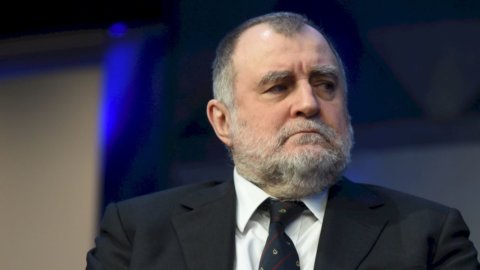
"A Trump negotiator, averse to wars and oriented towards growth, ainflation close enough to the goals, a good one growth global, central banks geared towards cutting rates and earnings that support stock valuations at record highs. These are all encouraging signs ahead of the closing of the year and a 2025 with good potential. But let's be careful not to get distracted and think that there is a sort of automatic pilot that will help us get through the next phase without too many shocks. No, the next one will be a complicated, difficult and challenging period". It is with these words that the strategist of Kairos, Alessandro Fugnoli opens the November 2024 edition of the podcast “On the 4th floor".
Markets and the 4 end-of-year challenges
Fugnoli's analysis inevitably starts from the geopolitics. “The willingness to negotiate with Russia, China and perhaps even Iran is ex ante positive,” says the economist, recalling that during negotiations, as a rule, the parties “are careful not to immediately blow up the negotiating table by raising the stakes on the ground,” he says.
“In fact, as we are seeing in these last few days in Ukraine, negotiations about to begin can lead to raising the level of conflict in order to enter the negotiations from a position of strength”. “Furthermore – adds Fugnoli – the willingness to negotiate can be mistaken for weakness and lead to raising the stakes and immediately establishing insurmountable red lines. Secondly, there is an objective difficulty in negotiating when there are too many unrenounceable points. Negotiations, on the other hand, can always drag on inconclusively or lead to irreparable ruptures”.
With the second challenge to be faced we move from geopolitics to economics. And the main theme can only be theInflation “that Biden is handing over to Trump not entirely tamed and that Trump will no longer be able to play, as Biden did, to buy growth,” the strategist underlines.
"If it wants to grow at a sustained rate, from now on America will have to act on the supply side and no longer on the demand side. It will have to aggressively liberalize energy, in order to increase its production and contain its price and deregulate the activity of companies", is Fugnoli's recipe.
Third challenge: the taxi, that – the strategist predicts – the Fed will cut less than the markets currently expect. “The Fed’s tightening, immediately evident after the November 5 vote, will weigh on growth that is already losing speed and going from 3 to 2 percent in the United States. Growth will also be affected by the containment of migration flows”.
Finally there are the duties that "it is true that they will weigh more on China and Europe than on American consumers, but a certain push towards inflation, however temporary, will also come from that direction", estimates Fugnoli.
Stocks and markets: what will happen?
The four challenges that await us in the near future will have to be absorbed "by stock markets which have rather high valuations and which already discount some of the positive potential of next year”.
“In practice – Fugnoli predicts – both the end of 2024 and 2025 continue to show a prevalence of positive factors compared to the negative factors, but without that ability to drag the markets on the wave of enthusiasm that we have seen in many phases of the long rise that started in the summer of 2022". "The stock markets will also be slowed down - he continues - by the presence of new factors to evaluate. Often, as in the case of Trump's inflation policies, these factors will tend to balance each other out, but markets, particularly bonds, will be in a cautious waiting position".
"There is a lot of talk these days about diversifying, that is, exiting America and rediscovering Europe, Asia and emerging markets. This may be true in specific cases, but let's remember that American exceptionalism is not destined to wane in the coming years, but rather to strengthen," continues the economist, according to whom "the dollar, at least in the phase of introducing tariffs, will remain very strong. America's role as an energy superpower will be beyond question. Including the three million barrels that Guyana, where almost exclusively US companies operate, will quickly reach, the US crude oil production will be double that of Saudi Arabia by the end of the decade."
And then there is theartificial intelligence which will attract such massive investment “that the next data centers being planned will each have not one but five new nuclear power plants to power them,” Fugnoli observes.
In Europe, the new German Government will try to reverse the process of deindustrialization next year and will certainly achieve positive results, "but the gap between America and Europe will grow further. As for'Asia, will be the region most affected by tariffs and from the sanctions of the next few years", the strategist summarizes.
“As long as both the dollar and Wall Street remain strong, America’s presence in portfolios will have to remain important,” he concludes.