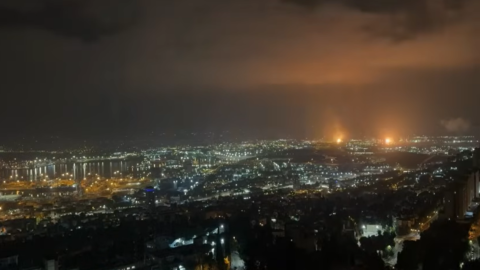
War between Israel and Iran, the attacks do not stop: the skies of the Middle East continue to be crossed by incoming missiles and jets taking off, while the military escalation enters an even more dangerous phase. Israel has launched a new wave of raids on Tehran, hitting strategic infrastructure such as surface-to-surface missile production sites, radars and surface-to-air launch sites. Two explosions of large scale have been reported north of the Iranian capital, while targeted attacks are also said to have affected the neighborhoods of Lavizan and Narmak, where, according to unofficial sources, there were Several senior Iranian officials killed by Spike missiles. The military site of Bidgoneh, in the city of Malard, and the area of Qom, near the Fordow nuclear plant, were also reportedly hit.
Israel-Iran War: What Netanyahu Said
“On behalf of the people and the State of Israel, you are doing extraordinary things: theIsraeli Air Force dominates Tehran skies. This completely changes the nature of the campaign,” the Israeli Prime Minister told the pilots. Benyamin Netanyahu visiting Tel Nof Air Base with Defense Minister Israel Katz. “We are on the road to achieving our 2 goals: eliminate the nuclear and missile threat. When we control the skies above Tehran, we hit regime targets, unlike Iran which targets our civilians. We say to the citizens of Tehran: Evacuate, then we act”.
Israel-Iran War: The Attacks
The Israeli army confirmed a direct attack on Quds Force command centers, the external operational arm of the Revolutionary Guards, speaking of “targets selected with the support of military intelligence”.
Meanwhile, theIran has escalated its response ballistic missile launch, including the new and feared “Qassem Soleimani” model. One of these hit the center of Israel hard, causing at least four deaths and over a hundred injuries, including a child in serious condition. The most affected areas, according to rescuers, are the central district that includes Tel Aviv and the north of the country, where “severe destruction” is reported.
Iran's new ballistic missile, unveiled just a month ago, is causing concern for its advanced capabilities: it has a range of 1.200 kilometers, can penetrate electronic warfare systems and is equipped with a sophisticated navigation system. Its effectiveness has raised questions about the Iron Dome defensive shield holding and is fueling fears outside Israel as well, given that Tehran has already threatened to use it against American bases in the Gulf.
WSJ: Iran Signals Willingness to Resume Talks
In the meantime, however, theIran would have urgently demonstrated his will to end hostilities and resume talks on its nuclear programs, sending messages to Israel and the United States through Arab intermediaries, the Wall Street Journal citing Middle Eastern and European officials. Tehran then told Arab officials that it was willing to return to the negotiating table on the condition that the United States does not join the attack, the officials added. They also conveyed messages to Israel that it was in both sides' interests to contain the violence.
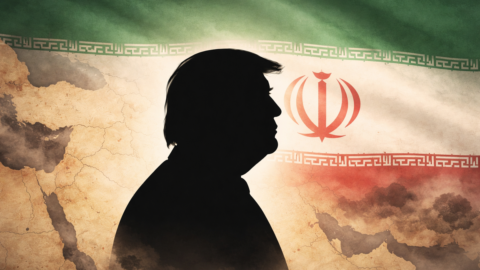
Trump: “Putin can mediate between Iran and Israel”
In the midst of the conflict, the most surprising intervention comes from Donald Trump, who proposed Vladimir Putin as mediator between Tehran and Tel Aviv. “He called me, we talked about it at length. He is ready to intervene,” the American president declared in an interview with ABC News.
The proposal has stunned the international community. Volodymyr Zelensky reacted with indignation, considering it a humiliation for Ukraine, while the European Union greeted the idea with deep embarrassment. “We don't think Russia can mediate,” the French president said Emmanuel Macron, which instead relaunched the hypothesis of new sanctions against Moscow. Irritation is growing in Brussels over an idea that could legitimize the Kremlin as a diplomatic actor, while the war in Ukraine continues.
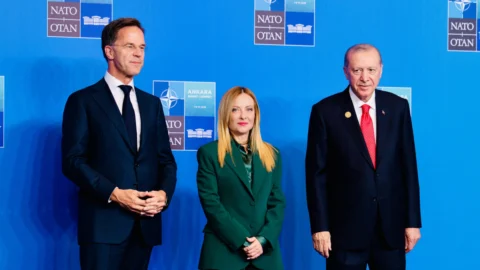
Even the Italian Prime Minister Giorgia Meloni is not convinced by the solution and considers the proposal "slippery" and "unrealistic", but intends to wait for the G7 in Canada to evaluate a common line. The Italian position, reported by sources at Palazzo Chigi, reflects the line of caution: "This hypothesis has not yet been discussed. Let's see what happens at the G7". Meloni, the crisis in the Middle East remains a priority, but the premise is clear: "no misalignment from the US", even if Kremlin's legitimacy remains indigestible.
In this context, the Prime Minister is preparing to discuss with Macron, Scholz and Sunak a common position to prevent Trump's initiative from becoming a diplomatic reality that is difficult to counter.
Trump-Moscow Axis Divides the West
Trump's initiative risks marking a diplomatic reversal: just as Putin intensifies the bombing on Kiev, he is recognized as having a potential role as a “man of peace” in the Israeli-Iranian conflict. A paradox that is shaking European chancelleries.
Trump assured that "peace between Israel and Iran is possible" and spoke of Contacts also underway with Tehran, despite threats to use force “at an unprecedented level” if the US were attacked. The Kremlin spokesman confirmed that Putin had phone calls with either Netanyahu both with the new Iranian president Masoud Pezeshkian, but without concrete results.
In the meantime, Oman and Qatar would have reopened a channel of communication between the US and Iran, while the The Jerusalem Post reports that some Iranian leaders are considering theoption to take refuge in Moscow, in case of uncontrollable escalation.
G7 in Canada: De-escalation draft but Trump does not sign
The summit of G7 in Kananaskis (Canada) is the first test bench to test the solidity of the Western front. According to the Reuters, the Group of Seven has a draft joint statement for the de-escalation of the conflict between Israel and Iran ma Donald Trump hasn't signed it yet. Reuters He says he has seen the text and spoken to two sources. The draft includes a commitment to safeguarding the stability of markets, including energy markets, and says Israel has the right to defend itself.
The president of the EU Commission, Ursula von der Leyen, meanwhile, spoke of a "negotiated solution" as the only horizon of peace for the Middle East, reiterating that "Iran will never be able to obtain nuclear weapons".
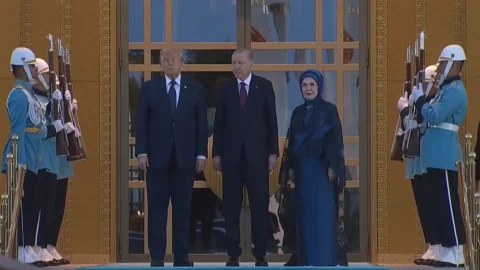
But the hypothesis of a direct involvement of Russia splits the Western front: Trump pushes, Europe slows down, and in the middle Zelensky's sense of isolation grows. And while Erdogan tries to propose himself as an alternative, the Middle Eastern fire threatens to overwhelm the global geopolitical balance.
(Last update: June 16th at 18.20pm)