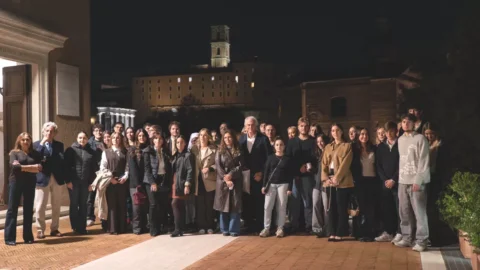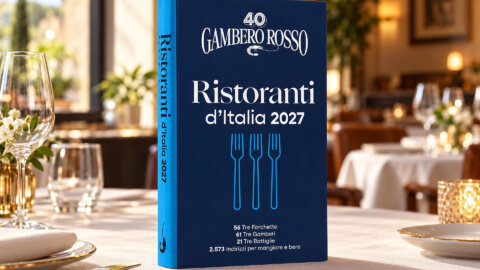
Abruzzo Uber alles: two Abruzzo restaurants top the list in Gambero Rosso's 2027 Restaurants of Italy guide. One, discreetly located in the province of Teramo, in a small town of just 1500 inhabitants, far from the major press and advertising hype, wins the Restaurant of the Year award. It's Osteria dei Maltagliati in Torano Nuovo (TE), a project by Maicol Capriotti and Federica Brandimarte who, after their experience in fine dining, chose a small village to build an offering centered on grilled meats, fine cuts of meat, and wine, combining the food with hospitality. Niko Romito's Reale in Castel di Sangro (AQ), a 3-Michelin-starred restaurant that has topped the prestigious World's 50 Best Restaurants list for years, needs no introduction. Bulgari restaurants have opened all over the world, including a star in Shanghai. The restaurant now tops the Gambero Rosso Italian Restaurant Guide 2027 with a score of 99/100, knocking Osteria Francescana in Modena off its podium position last year with a score of 98/100. Piazza Duomo in Alba (CN) ranks third with a score of 97/100.
The 2027 Guide awards 56 restaurants with Tre Forchette (Three Forks). Behind the top three, Atelier Moessmer Norbert Niederkofler in Brunico (BZ) and Uliassi in Senigallia (AN) achieved 96/100, followed by Le Calandre in Rubano (PD) with 95/100. The best trattorias are represented by 61 Tre Gamberi (Three Gamberi) restaurants, while 21 establishments receive Tre Bottiglie (Three Bottles), demonstrating the attention paid to places where wine selection is a central part of the experience.
The Special Awards showcase the diverse directions of contemporary dining. The Emerging Chef award goes to Genya Malafronte of Legàmi, in Morro d'Oro (TE), while Sextantio – Cucina, in Santo Stefano di Sessanio (AQ), is the Newcomer of the Year. Cascina Lago Scuro, in Stagno Lombardo (CR), receives the Cuisine and Territory award; daGorini, in San Piero in Bagno (FC), receives the Tasting Menu of the Year award, and Somnium, in Eboli (SA), receives the Research and Innovation award.
Three professionals were awarded Pastry Chef of the Year: Ambra Campodonico of Ristorante Sentiero in Elba, Rosita Mammone of Uliassi in Senigallia, and Martina Tramis of Lilith in San Cesario di Lecce (LE). The Best Hospitality award went to Michela Scarello of Agli Amici dal 1887 in Udine; Luca Belleggia of Pagliaccio in Rome was named Best Sommelier. Ristorante Del Lago in Bagno di Romagna (FC) received the award for Best Wine List, and Hebbo in Dobbiaco received the award for Best Wine Bar.
The guide also pays homage to Don Alfonso 1890, Dal Pescatore Santini, Enoteca Pinchiorri Tre Forchette since the first edition in 1990.
There are no half measures to praise the history of Don Alfonso: "The greatest—in history, status, and perception—gastronomic maison in Southern Italy," the citation states, "continues its work of meticulous immutability. In the healthy setting of Sant'Agata sui Due Golfi, Don Alfonso 1890, an outpost of the Iaccarino family, continues to be a beloved destination for enthusiasts and the many repeat guests who have frequented its elegant and colorful rooms for decades. Through the generations, the Iaccarino family has managed to maintain its identity intact, with Ernesto and Mario now masters of the kitchen and dining room, respectively, in a conscious rhapsody of moments, colors, and coherence that manifests itself from the aesthetics of the dishes to the amiable and legendary hospitality. Another great strength has been the ability to explore the territory ahead of time, through decades of dedication to local products, especially vegetables. Central to this is the Le Peracciole farm, which provides vegetables, oil, honey, and even the lemons for the restaurant. Limoncello: a commitment that has made, and continues to make, the Iaccarinos pioneers and champions of a certain type of local cuisine. In the dining room, guest service remains central to the Don Alfonso philosophy. The cellar is splendid and iconic—with a descent into a subterranean cellar that also serves as a cheese aging room—and vast, boasting an impressive selection of wines and a truly evocative setting.
"Everyone has passed through the Santinis," explains the Gambero Rosso Guide, "artists, politicians, great chefs, gastronomes, singers, and actors. And even today, a dinner here is a small display of composure and hospitality. The epic pumpkin tortelli with butter and Parmigiano Reggiano are officially among the most ordered dishes in Italian restaurants over the last half century. The desserts are regal, the wine list is sumptuous, and the service, of course, impeccable."
Finally, regarding Enoteca Pinchiorri: "Every year, it faces two complex and parallel challenges. The first is the affirmation of its restaurant and hospitality model, which must continually renew itself to reflect contemporary trends. The second, even more inevitable, is the confrontation with its coat of arms: that of an icon that has shaped the history of Italian gastronomy. This task falls to a team of professionals led by Riccardo Monco, chef and co-owner of the restaurant, chef Alessandro Della Tommasina, and the longtime restaurant manager and sommelier Alessandro Tomberli, also a partner in the restaurant."
Alongside the awards for value for money, avant-garde cuisine, and the world's best cuisine, there's also a selection called "I'd go back tomorrow," which continues the theme of this edition.
The journey continues digitally: the guide's contents are now searchable, geolocalized, and indexed by search engines, taking up the challenge of artificial intelligence. The 2027 Italian Restaurant Guide is available in digital format for free, upon registration on gamberorosso.it.
In the year Gambero Rosso celebrates its fortieth anniversary, the guide posed a concrete question: where would you like to return tomorrow? This approach informs the work of over one hundred professionals, coordinated by curators Valentina Marino and Annalisa Zordan, and focuses on taste, hospitality, and the overall enjoyment of the experience. What emerges is the story of a restaurant industry under pressure from rising costs and the difficulty of finding staff, yet capable of seeking new formulas and opportunities even off the beaten path.
"The question we started with is simple: which restaurants would we like to return to tomorrow?" says Lorenzo Ruggeri, editor-in-chief of Gambero Rosso. "We look for places that have something to say through the authenticity of the food, the hospitality, and the people. Italian dining is changing faster than the categories we're used to describing it with: our job is to recognize its quality, from a great signature restaurant to a provincial osteria. Forty years after the founding of Gambero Rosso, we continue to do so with curiosity and clear choices."
The most obvious change concerns the rating system. There are now three reference symbols: Forks for restaurants, Prawns for trattorias, and Bottles for wine destinations. Bistros and international cuisines are reclassified based on their offerings, while the separate score for restaurants is no longer applied. The overall score, expressed in hundredths, remains, taking into account cuisine, wine cellar, and service. This decision highlights the uniqueness of each establishment and provides readers with a judgement on the overall experience.
"We wanted a more accessible guide, one that could follow the evolution of these establishments without constraining them into overly rigid categories. The symbols change, but the focus remains on the ingredients, hospitality, cuisine, and wine. We're interested in helping readers choose the right place for the type of experience they're looking for: a Tre Gamberi and a Tre Forchette express the same excellence, each in its own way," comment curators Valentina Marino and Annalisa Zordan.