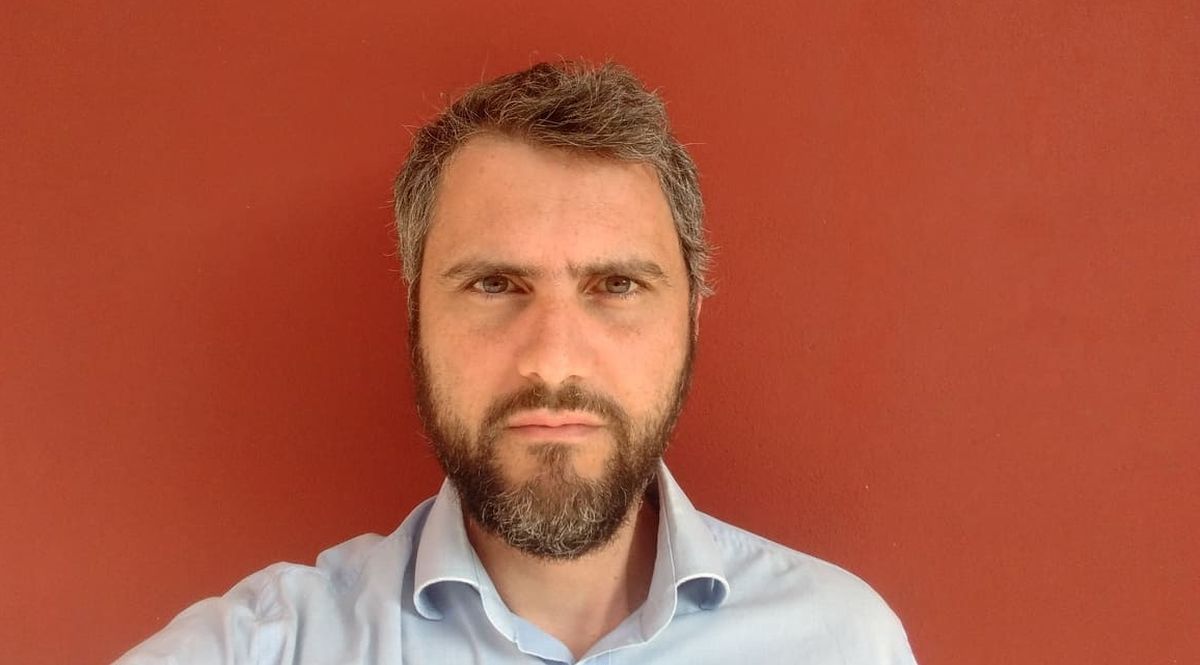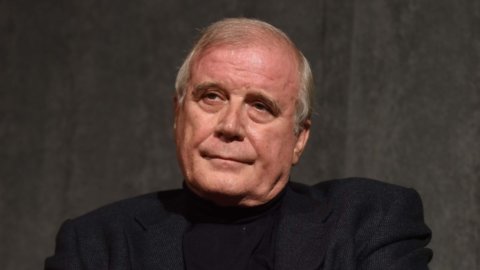
“Covid will bring us back to the Renaissance model, to the Italy of 100 cities, to the close relationship between city and territory. Or rather, to quote the historian Fernand Braudel, the functional relationship between the rich city and the flourishing countryside”. Commenting on the new paradigms of Italian social and economic life in times of the coronavirus is the sociologist Aldo Bonomi, founder of the AASTER consortium and expert in territorial dynamics urban and extra-urban, as well as a university professor and collaborator of various newspapers, including the Sole 24 Ore for which he has been editing the "Microcosmi" column for years. It was he who theorized, well before the epidemic, the smart land as an evolution of the smart city, following the example of the Italian Renaissance: "The very word "Comune", according to another great historian, Jacques Le Goff, was born in Italy. The post-Covid model will no longer be megalopolises but there will be a shift from 'full' to 'empty', from the center to the periphery. The virus will lead us to redesign urban spaces but also networks, transport and production platforms".
Professor, is Covid accelerating the territorial dynamics you theorize?
“If we had done this interview a year ago, we would have talked about metropolisation, city-states, smart cities. Now, however, it seems clear that there is no smart city without smart land. At the center of attention is no longer the metropolitan 'fullness' but also the 'emptiness' of the surrounding area. There is an interweaving between the urban dimension and the territorial dimension. And I'm not just talking about teleworking from home in the countryside, but about the rediscovery of a territorial dimension. For example, in the same fight against the virus we have seen the importance of proximity medicine, of a horizontal healthcare network, in the Veneto style, and not too verticalized like the Lombard one. And then we understood that the territory is the space for good living, quality of life, the green economy".
What do you mean by 'full' and 'empty'?
“That the virus will force us to redesign urban forms. The problem so far has been in the 'full', in the 'centre', where everything is: in France the highest alarm level is in the Ile de France, the Paris region. On the other hand, in the territory there is a 'gap' of space, understood not only in the demographic sense but precisely in terms of functions, networks and production platforms. We will return to a model that is familiar to Italy: that of the Renaissance, of small Municipalities, of medium-sized cities, of district-cities, linked precisely to economic activities. We will avoid concentrations, preferring the plurality of housing and development models”.
Are you talking about relocation?
“Not only that, that's not the point. It is about redesigning urban spaces and models of coexistence. Inevitably, given that we have had many problems in the 'full', with the infections and the crisis that have hit hard, we will tend to look for the 'emptiness', with new paradigms that are all to be defined and which can be connected to the green new deals, for example. The culture of the margin will prevail: the model will no longer be megalopolises but the proximity of fundamental resources such as water, greenery, clean air. We saw it again this summer during the holidays: many Italians, many more than usual, have chosen the mountains and the countryside”.
Not just for the holidays: after decades of migration from the countryside to the city, it seems that the possibility of working remotely is reversing the trend: can we talk about counter-migration?
“Not really, because the phenomenon does not concern only the forms of living. The point is not trivially to leave the center to occupy the empty spaces in the area. It's not about saying “I'm going to live in the countryside and I telework”. It is really a question of redesigning production platforms, for example with the green economy, which is creating new economic models. However, let us always keep in mind that cities will continue to play an important role. As Braudel said, it is about creating a link between the rich city and the flourishing countryside”.
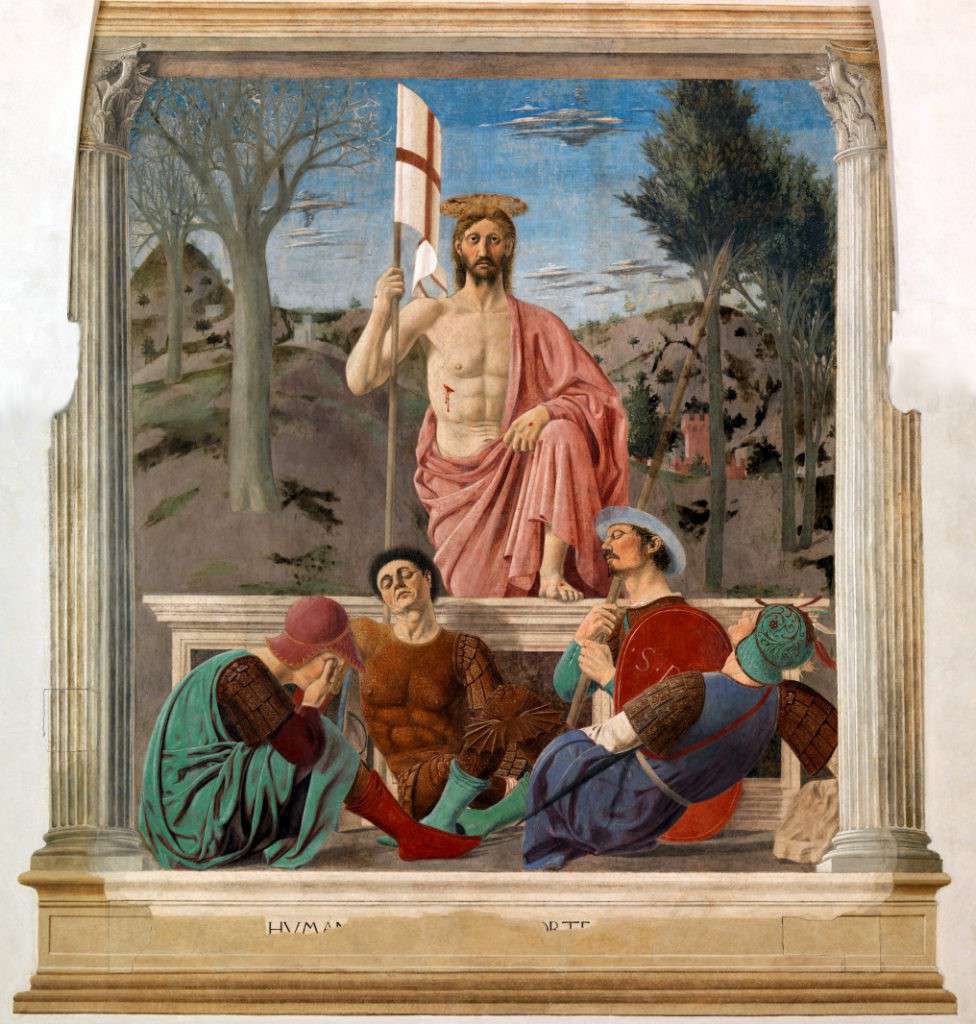
In one of your books, you have already talked about smart land as an evolution of the smart city and you have chosen the Resurrection by Piero della Francesca, exhibited in Sansepolcro, as its symbol. Why exactly that painting, and would the metaphor still be relevant today?
“Piero della Francesca's painting is a powerful metaphor for the concept of smart land because in the background there is the dimension of the landscape, made up of 'emptiness', and because it is located in Sansepolcro, a symbol of that Italy made up of many small hardworking communities. Sansepolcro is not the smart city, it is not Rome or Florence, but it is the smart land, or one of the many examples of a rich city and a flourishing countryside of that period. The work is certainly still current, first of all because we are talking about 'resurrection', which is what we must now aspire to as a country, in restarting after the pandemic. Among other things, the fact that we are talking about painting and the historical period in question bring us back to the concept of digital Humanism”.
What do you mean?
“We are used to a technology made up of algorithms, which remains in the hands of a few digital giants. It's time to 'land' these tools, to ensure that control over them is widespread and shared. Let's think, for example, of e-commerce: should it remain in the hands of the spaceship only or is it right that the spaceship lands and control of the tool slowly reaches the territories and communities, who then adapt to it?”.
Covid has cleared smart working through customs: do you think it is only a good thing or does this also create contraindications in social and family relationships and in the relationship with the domestic environment?
“If it is understood only as telework, it becomes a problem, because it creates alienation and exploitation. Instead it must produce meaning and richness, and therefore be interpreted as a new way of communicating. But I would also make two other reflections on work. Covid made us discover the centrality of last mile workers: during the lockdown we understood the value of the technicians who maintained the light and gas systems, of the supermarket salesmen, of the workers in the food chain, of home deliveries. And then we finally realized that the welfare state doesn't arrive everywhere: in Italy there is a supply chain of the invisible, which we should start taking care of”.
And the school, which is so much talked about these days?
“I will mention another book of mine, on molecular capitalism. In the face of Fordism, which a century ago represented the 'full', we had begun to fill the 'void': and therefore industrial sheds that expanded into the area around the city, and the so-called districts. Now we need to build evolved social districts, that is territorial spaces where there are schools, where there are services, where there is a general practitioner. It is about creating what I would call community welfare: an epochal challenge, for which a large part of the money from the Recovery Fund should be used".
In conclusion, professor, a recurring question: in your opinion, is Covid making us a better community, as we hoped months ago, or on the contrary, are the difficulties bringing out individualisms?
“To quote the philosopher Roberto Esposito, the virus has made the communitas-immunitas polarization evident on our bodies. Polarity that we have defined as social distance by confusing physical distance with the 'desire for community', which has indeed increased. Both in its negative aspects (grudge, closure, closure), but also fortunately in the polarities of the community of care, i.e. doctors, nurses, volunteering, and in the reflections on an industrious community, on the debate around the economic restart, which is adapted to the times of ecological and pandemic crisis. Traces of hope emerge from the alliance between care and industriousness".