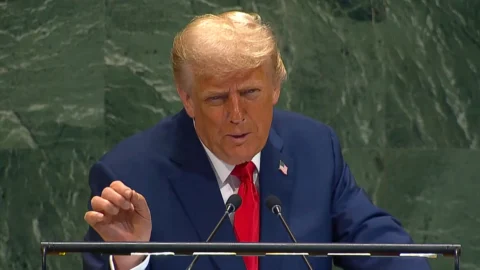
"Iran decimated, we are close to finishing the work. Whoever receives oil from Hormuz should take care of it." For the first time since the beginning of the conflict, the US president Donald Trump He addressed the nation with the stated goal of quickly ending a war he himself launched. The message, in its intent, is straightforward: the end is near. In reality, however, the picture appears less clear.
In less than 20 minutes, the president tried to convey confidence, firmly claiming the military achievementsHe spoke of a "destroyed" Iranian navy and announced that the United States "will strike extremely hard for the next two to three weeks." His clear tone reinforces the idea of a conflict under control. Or at least, that's how it's presented. Yet, even as he insists on imminent victory, Trump avoids indicating when and how the war will truly end. This absence weighs heavily, especially for an American public still skeptical of both the conflict and its management.
Trump on Iran: "We'll take them back to the Stone Age."
The harshest passage comes when he states that the goal will be "to take them back to the Stone Age, where they belong." This extreme formulation makes clear the intensity of the approach adopted but leaves open a central question: what will the consequences be for the stability of the region?
Even on a strategic level, the indications remain limited. The president did not use the speech to attack the NATO allies nor to formalise the exit from the alliance, a hypothesis evoked a few hours earlier in an interview: he had anticipated to Reuters He reportedly expressed his "disgust" at the lack of support he's received, reiterating that he considers a withdrawal "absolutely" possible. This choice helps keep the message focused on the conflict, but fails to clarify the overall picture of the alliances.
Hormuz and the role of other countries
On the energy front, Trump has shifted part of the responsibility towards other countries, inviting them to take charge of the safety of the Strait of Hormuz: "The countries of the world that receive oil through the Strait of Hormuz must take charge of that passage. Seize it, protect it, use it for yourselves."
A message that sounds like an explicit request to international allies and partners to take on greater responsibility, especially after, according to the president, the United States has already done "the hardest work."
The president instead thanked some regional partners – including Israel and several Gulf countries – assuring them that they will not be left alone.
The return to the nuclear theme
The line of intervention is also supported by the reference to one of the cornerstones of his political narrative: prevent Iran from obtaining a nuclear weaponTrump recalled the Obama administration's withdrawal from the nuclear deal, presenting it as a necessary step toward the current military phase. A reconstruction coherent in form, but one that overlooks the intermediate steps that led to the current escalation. According to the president, Iran's nuclear capabilities are now severely compromised: the stockpiles are "buried" and it would take "months" to rebuild them.
Finally, he asked the Americans for patience, defining the war as a "investment for the future”, promising that, once it's over, the United States will be "bigger and more prosperous" and the world will be "free from the Iranian threat." He acknowledged concerns about rising energy prices, but assured that this is a temporary phase and that costs will decline. An attempt to transform the conflict into a project, with expected long-term benefits.
Meanwhile, markets remain cautious: immediately after the speech, the Oil prices it started to rise again, a sign that operators were expecting more concrete indications on the timing and development of the crisis.
Overall, no sensational announcements. The speech appears compact in form, but less definitive in substance: strong in its declarations, more uncertain in its prospects.