Behind its solemn halls and corridors illuminated by the glare of the Glass Pyramid lies a parallel story of audacity, mystery, and criminal ingenuity. The Louvre, the most visited museum in the world, a universal symbol of European art and culture, has repeatedly been the scene of robberies seemingly straight out of a novel: carefully planned, often commissioned, actions intended for private collections invisible to the public.
The heist of the century: the missing Mona Lisa
The most famous case dates back to August 21, 1911, when La Gioconda by Leonardo da Vinci disappeared from the walls of the Louvre. It was stolen by Vincent Peruggia, an Italian house painter convinced that the painting should "return home." Peruggia hid in the museum, waited for dawn, and emerged with the portrait under his coat. When the theft was discovered, the entire world talked about it: newspapers, artists, and the curious transformed the gesture into legend. Two years later, in 1913, the work was found in a hotel in Florence. The theft of the Gioconda made the painting the most famous image in the history of art.
The Louvre at War: Art Under Siege
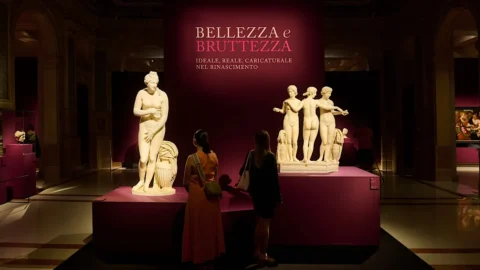
During the Second World War, the threat changed face. The danger no longer came from isolated thieves, but from armies. Jacques Jaujard, director of the French national museums, organized a colossal evacuation: thousands of works—including the Venus de Milo , Nike of Samothrace —they were transported and hidden in castles, abbeys, and countryside far from Paris. Despite the Nazi occupation, much of the collection was saved, although numerous minor artifacts and jewels disappeared, ending up in the hands of German collectors and officials.
Silent thefts and the black market
In the 1970s and 1980s, at the height of the boom in the black market for art, the Louvre was hit by a series of silent thefts: Egyptian amulets, statuettes, coins, small archaeological finds. These weren't spectacular heists, but discreet thefts, often by in-house staff or knowledgeable visitors. Many of these objects were recovered years later at auction or private collections, but others remain missing. The episode revealed that the danger for museums isn't just inadequate technology, but human vulnerability.
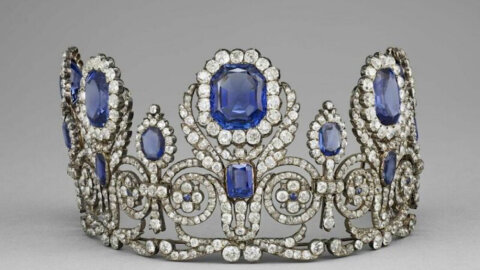
In the 21st century, with sensors, bulletproof glass and artificial intelligence, the Louvre seemed impenetrable. Yet, the October 19, 2025, history repeated itself: a group of professional thieves broke into the Galerie d'Apollon, stealing in a few minutes precious jewels from the Napoleonic era. Among these, a crown belonging to Eugenie de Montijo, wife of Napoleon III, was found damaged not far from the museum. The operation, which lasted less than seven minutes, was carried out with military precision: entry through a side window, use of a construction site lifting platform, and escape on a motorcycle toward the Seine. No trace of the culprits was found.
It could be a theft on commission: an operation carried out by professionals who knew exactly where to strike and what to look for. Stolen jewels, in fact, are extremely difficult to place on the market, too recognizable to appear at auction. This suggests a private buyer, a collector willing to pay enormous sums to possess a fragment of history, hidden in some inaccessible vault or villa. The robbery at the Galerie d'Apollon is not only a wound to French heritage, but also a symbol: it demonstrates that not even the most guarded places are immune from the lust for possession. Behind every art theft, especially when it involves historical treasures, lies an invisible world of obsessive passions, power, secrecy, and money. Today, the Louvre remains a sanctuary of art, but also a target for those who see in its treasures something more than economic value: a trophy, a fetish, a piece of eternity to be kept for themselves. And so, from the silent corridors where the Gioconda, until the recent disappearance of Napoleon's jewels, the history of the Louvre continues to tell us that, faced with beauty, man does not only know how to contemplate it: sometimes he tries, in vain, to possess it.