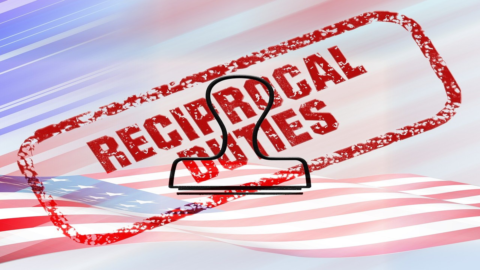
Two lists together for a total of 93 billion euros. This would be the plan of the European Commission which, while continuing to hope that the stalemate in the negotiations will be resolved, has nevertheless preferred to organize itself for any eventuality. What until yesterday were two lists containing countermeasures respectively of 21 billion and 72 billion euros, from today they become one. The list will be submitted to the Member States to be approved and, in the event of no agreement, the tariffs contained therein will come into force "before the August 7th".
“The main objective of the EU – explains the spokesperson of the EU Commission for Trade, Olof Gill. – is to reach a negotiated outcome with the United States. Intensive discussions are underway at the technical and political levels. Commissioner Maroc Šefčovič will speak with US Commerce Secretary Howard Lutnick this afternoon, shortly before the Commission briefs EU Member States at Coreper.
“Although our priority is negotiations – Gill said – we continue in parallel to prepare ourselves for all outcomes, including any additional countermeasures. To make our countermeasures clearer, simpler, and more effective, we will merge Lists 1 and 2 into a single list (which will not enter into force before August 7) and submit it to Member States for approval.
Bessent: "The EU should follow Japan's example."
Meanwhile, the US Treasury Secretary, Scott Bessen, leave the door open to a agreement for 15% tariffs with the European Union, making it clear that Brussels should, in order to succeed, follow in Japan's footsteps. “They got the 15% rate because they were willing to provide this innovative financing mechanism,” Bessent said in an interview with Bloomberg Television, referring to the new agreement between the United States and JapanTokyo had previously faced a 25% tariff, but its negotiators reached an agreement on a 15% rate, including on car imports. The agreement also includes a $550 billion fund for investment in the United States.
The Treasury chief also downplayed a report that the EU was preparing to impose retaliatory duties of 30% on approximately 100 billion euros in US products. "It's a negotiating tactic, and that's what I would have done in their place," he said. Asked if Brussels had proposed anything innovative in its talks with the United States, Bessent replied: "Not yet, but I repeat, the talks are going better before".
According l 'Handle, citing European sources, the US is reportedly exerting pressure on Brussels on both Big Tech and the sensitive pharmaceutical sector. Among the American demands, it is explained, are the exclusion of US tech companies from certain provisions of European regulations, as well as proposals for regulatory simplification.