
The negotiations on the revision of the CO2 emissions trading mechanism, which pits Italy against Eastern European countries such as Poland and the Visegrad group (Czechia, Slovakia and Hungary), are bringing to light all the fragility of the European industrial system and the profound differences between Italy and countries like France, Germany, and the Nordic countries. These differences emerged in all their criticality during the last European Council on October 15th.
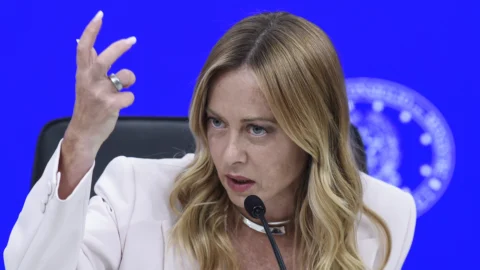
The Italian Prime Minister Meloni with the help of the leaders of the Visegrad countries I ensured that the final text of the Council's conclusions included explicit references to ETS1, which concerns energy-intensive industries such as ceramics, glass, and aluminum, and ETS2, which concerns road haulage, construction, and heating, with knock-on effects on end consumers.
Italy led a group of countries that for Ets1 asked not to further expand the scope and to assess all the impacts on the business system to avoid progressive deindustrialization. For the ETS2, which is scheduled to come into force in 2028, Italy and the Visegrad countries are requesting a postponement until after 2030.
Meloni has made herself spokesperson for the needs of the business world that in sectors such as ceramics and aluminum are unable to further reduce emissions with available technologies and that, to face competition from China and India, have no choice but to close.
Italy and the Visegrad Group are therefore calling for the allocation of free quotas to help businesses survive and for a review of the mechanism that currently sets parameters for each sector based on the ten best European performers. But for example: There is a big difference in biomass between Northern and Southern European countriesThe system currently works on a sort of auction whereby emitters who have used few fossil fuels can sell quotas to those who have emitted the most, with the hope of creating a virtuous mechanism that rewards the most virtuous companies.
The mechanism was introduced with EU Directive 203/87 and last July the Commission has proposed a revision which the Irish Presidency intends to have approved by the Council by December and then also obtain the green light in the dialogue with the European Parliament by the first months of 2027.
Meloni is also deeply concerned about the effects of ETS2 on road haulage and therefore large fossil fuel distributors, which, if penalized, would inevitably pass the increased costs on to the final consumer, such as higher bills or higher prices at the pump. Therefore, in this case too, Italy, Visegrad as well as countries like Malta and Cyprus they ask to better evaluate the impact on the entire system.
Despite the good intentions of EU Council President Antonio Costa and the Irish presidency, the demands of Italy and its allied countries in this battle will not be easy to breach the solid walls of Northern European green alliances. However, it cannot be ruled out that ETS revisions could represent a bargaining chip also in the next negotiations between the 27 on the 2028-2034 budget, which will get into full swing at the European Council on 26 November.