The Italian banking risk returns the shadow of the golden power. And not only for the words pronounced on Wednesday by the Minister of Economy Giancarlo Giorgetti who, referring to the possible wedding between Banco Bpm and Crédit Agricole Italia, he said that "the golden power also applies to them", but also because Italy still faces a dilemma the judgment of Brussels on the special powers applied last April on another operation, that of Unicredit on the Bank, then withdrawn due to the uncertainty generated by the decision of Palazzo Chigi. Indeed, if we look closely, we need to speak in the plural because there are actually two judgments: that of the DgComp led by European Commissioner for Competition Teresa Ribera, and that of the Directorate-General for Financial Services (Fisma) led by Maria Luís Albuquerque who in April had launched the EU Pilot procedure to verify the compatibility of the Italian legislation on the golden power with the Community Treaties.
Banco BPM-Crédit Agricole Italia: Giorgetti's impartiality
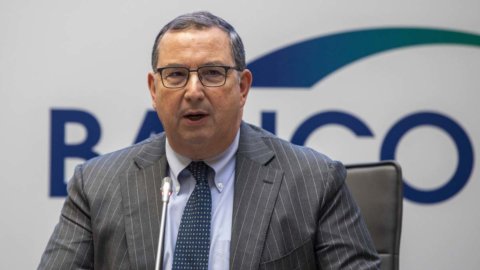
"I I have no political objections, I have a law that I have to enforce., as I have made others respect it, I will make them respect it. There is a law and it applies to everyone"; he Minister Giorgetti stated yesterday, responding to journalists who asked him if he had any objections to a possible merger between Crédit Agricole Italia and Banco BPM. When asked if he was also considering using the golden power, the minister replied: "I'm referring specifically to that law."
The Italian government, with a decree issued on April 18, had The golden power was applied to the offer launched by Unicredit on Banco Bpm, appealing to reasons of National securityAmong the main reasons, in addition to the presence of Piazza Gae Aulenti in Russia, was also mentioned Anima, the company that controls over 200 billion in assets under management, acquired by Banco Bpm at the beginning of April.
With the Unicredit hypothesis having thus faded, in the last few weeks there has been talk of a new wedding, this time between the bank led by Giuseppe Castagna and the Italian subsidiary of Crédit Agricole which is also Banco's largest shareholder with a 19,8% stake. With the merger of the two entities, the French Banque Verte would reach just under 30% of the Milanese bank. And many, following the progress of the matter, had wondered whether the government would "say something," as in the past, or simply let things happen. Giorgetti's comments seem to favor the former hypothesis.
Brussels' opinions on the golden power
And it is precisely in this context that Brussels comes into play, having in the spring targeted the decree of 18 April with which the Italian Government had imposed a series of measures requirements for Unicredit's offer. According to reports from Mf-Milano Finanza, After the Piazza Gae Aulenti backtracked, there were fears that the DGComp no longer had the authority to decide on the case, a thesis also supported by Palazzo Chigi. After consulting some legal sources and receiving the necessary reassurances, the authority led by Teresa Ribera would have decided to move on in order to see clearly about the reasons of "national security" with which the government had justified its intervention. The decision could therefore arrive in the next few weeks. And "if the government's decisive influence is ascertained, at this point a infringement of the Merger Regulation, paving the way for a possible sanction against Italy", explains Mr.
In the meantime, it continues, and could reach similar conclusions, too. the EU Pilot procedure The investigation was opened by FISMA to verify the compatibility of Italian legislation on the golden power with the Treaties and European rules on the free movement of capital. If the Directorate-General for Financial Services were to decide that, by applying the golden power, the Italian government exceeded its powers, it could lead to an infringement procedure, as already happened a few months ago with Spain and with the intervention of its government in the BBVA-Sabadell operation.
Both decisions are highly anticipated. Not only for their theoretical impact on the game of risk (not just banking), but also for their practical impact on the Banco BPM-Crèdit Agricole Italia deal, which, with its special powers weakened, could have a slightly better chance of success. This is without considering the potential reaction of Unicredit, which, having cleared up the uncertainties that affected its previous offer, could choose to return to the Piazza Meda stock exchange. There's also a third possibility: the special powers remain where they are. In this case, Banco BPM could also choose to shelve the merger with Crédit Agricole Italia in favor of what has always been CEO Giuseppe Castagna's preferred option: integration with MPS (and Mediobanca) to create the now infamous third pole. All Italian.
Goldman Sachs is “Buy” on Banco Bpm
The different hypotheses are also having repercussions on the markets, with Banco Bpm shares are rising by 1,6% to 12,815 euros against a Ftse Mib down by 0,12%. Also pushing up the prices is the decision of Goldman Sachs to initiate coverage on the title with a “buy”. Among the reasons behind the decision, analysts have also highlighted "the potential for participation in further consolidation operations in Italy." In its report, GS also discusses UniCredit's failed transaction and the possibility of a merger with Crédit Agricole. While not expressing any opinion on the possibility of the transaction taking place, "in a hypothetical merger scenario and assuming no overlap in the businesses and no synergies," it states, "a combined entity would have a market share of about 10% in deposits and loansi, a level that we believe is similar to Unicredit's domestic share, but still only half that of Intesa Sanpaolo."