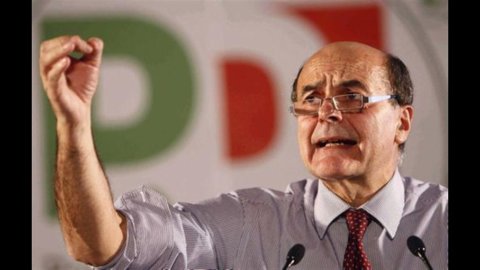
Another day of fire on the stability law. The latest rumors speak of an agreement arriving between the Government and the parties for a radical change of course on the provision, but the armistice between the two fronts is not yet official. Today even an unprecedented clash took place between the Minister of the Treasury Vittorio Grilli and the leader of the Democratic Party Pier Luigi Bersani. In the background, the controversial assessments arrived from the Bank of Italy and the Court of Auditors. Meanwhile, after yesterday's meeting between Prime Minister Mario Monti and UDC number one Pier Ferdinando Casini, tonight the Prime Minister will meet Angelino Alfano and Silvio Berlusconi. Tomorrow, however, the Professor will receive bersani at Palazzo Chigi.
GRILLI: THE CUT IN IRPEF HAS POSITIVE EFFECTS FOR 99% OF TAXPAYERS
According to Grilli, who spoke to Parliament today, the cut in income tax and the measures on deductions and deductions "will have positive effects for 99% of Italian taxpayers". In detail, "from the databases of the Revenue Agency - explained the minister -, of the 40 million taxpayers, 30 million certainly enjoy a positive effect, while a non-positive or negative effect is had for about 450 thousand taxpayers".
BERSANI: IT'S FALSE, THE MANEUVER DOESN'T BEAR THE CITIZENS
Bersani's reply was not long in coming: “I don't agree with Grilli – wrote the democratic leader on twitter -. It is false that this law will not affect citizens' conditions and income. I'm centre-left, I'm proud of it. And I think that the centre-left must put some equity into a system that has little of it”.
BANKITALIA: NECESSARY TO REVIEW THE FISCO, NEW MEASURES IN THE SPRING
To counteract these jokes came the statements of the deputy general manager of Bank of Italy, Salvatore Rossi, who, like Minister Grilli, reported to Parliament on the stability bill. “There remains the need for an organic overhaul of the tax system – said Rossi -, taking advantage of the opportunity offered by the enabling bill currently under discussion in Parliament”.
But there is a bogeyman to reckon with: according to Rossi, it could be "prudent" to envisage limited corrective measures for "next spring" to ensure a balanced budget even after 2013. The bill, in fact, “slightly increases the 2013 deficit, by just under 3 billion, bringing it to 1,8% of GDP. In structural terms, the commitment to a breakeven would not cease”. But in the following two years "slight structural deficits are allowed to emerge - underlined the deputy general manager of Palazzo Koch -, albeit within the margins of tolerance allowed by European rules". In any case, "the safety spaces" are restricted.
COURT OF AUDITORS: NEGATIVE EFFECTS OF TAX RETROACTIVITY
The Court of Auditors is far more critical of the stability law. In particular, the State accounting judiciary believes that the derogation from the principles of the taxpayer's statute, such as the retroactivity of tax rules, could have "negative effects" on transparency and loyalty in the "tax-taxpayer relationship". In particular, according to the Court of Auditors, there is the risk that cuts in deductions and deductions could increase tax evasion.
ISTAT: DISADVANTAGE FAMILIES WITH CHILDREN
According to the president of Istat, Enrico Giovannini, the VAT increase will have a "complete and immediate transfer to consumer prices": the maneuver will "overall" affect the prices of goods and services relating to "almost 80% of the for consumption”, continued the president of Istat. As for the one-point cut in the first two personal income tax rates and the reformulation of deductions and deductions, the average tax reduction per family will be equal to 240 euros a year. In particular, according to the institute's calculations, the measures considered involve an average benefit of 340 euros a year for 77,7% of families and an increase of around 290 euros for 7,4%, while for the remaining 14,9 .XNUMX% of households the effect will be essentially nil.
In general, "families with children, especially minors, have lower benefits than the average". The disadvantage is more evident if the children are minors "or in any case still engaged in studies or not economically self-sufficient since it is linked to the fact that childcare reduces the probability of employment of mothers and, for employed ones, constitutes an obstacle to the attainment of higher earnings".