A gymkhana. The European transition towards renewable sources increasingly resembles a journey made up of curves and straight lines. Angela Merkel's farewell is also felt in the energy and environmental fields. Your country, like others, cannot do without fossil fuels entirely to support the economy. The plans to proceed only with wind, photovoltaic or green hydrogen, on paper, are so captivating that it is hard to believe what is happening in reality. Merkel characterized her politics with a keen sense of Realpolitik energy without closing any road. Seen from our house, the evolving situation presents us with the start of the Italians against the increase in electricity and gas tariffs - mitigated by rapid government intervention - and greater gas availability throughout Europe, including the Tap that arrives in Puglia.
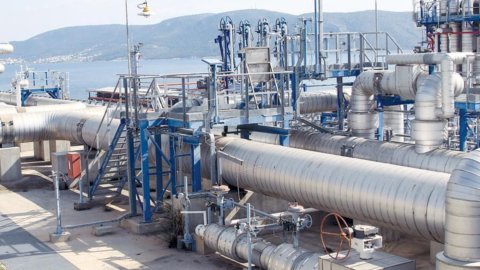
A few days after the completion of the Stream2 gas pipeline from Russia to Germany,Energy: Nord Stream 2 starts, a plug for Europe Norway announced the entry of 2 billion cubic meters of gas more towards Europe. Norway is the second country that transports gas within the European borders. After Russia, of course. And in one year it has already put 106 million cubic meters online to meet the growing demand from industry. An energy power on the rise, therefore. The new gas offer is configured as a good response by the Norwegian company Equinor to the post-pandemic economic recovery. And also in this case Germany is at the top. The fact that there is also a surge in prices in recent weeks is irrelevant. The Agency Reuters he calculated that the new quantities of gas arriving correspond to an increase of 2% per year than that already exported. The extractions from the Troll and Oseberg fields will support companies in every sector, processes of all kinds with imaginable consequences on the environment.
The question that circulates, not only due to the Chancellor's farewell, but also due to Draghi's declarations at the Confindustria Assembly is: what effects will the greater influx of gas have on the energy transition e on Green New Deal investments? There is no single answer. Especially if we take reliable studies and research as a reference. The reality is that the production conversion processes towards renewables are slow. Within the game of supply and demand with the billions of dollars in circulation for import-export contracts, alternative sources are still in a subordinate position. European industry is lagging behind on average. The role of big finance from which everyone expects money also suggests. Contradictions are not lacking with respect to the strategies established both at a European level and in individual countries. So if it is true that Italy fails to reduce the share of incentives for fossil fuels, it is equally true that sustainable finance has not yet entered the right gear. He hasn't taken on that leading, persuasive role toward investors. It is trivial to remember this, but both public and private money are needed for the transition. Angela Merkel in the last years of her mandate was in equilibrium between public spending and private capital, between fossil and renewable sources. Then thanks to Draghi and Cingolani, Italy also traced its own path.
A study by the Forum for Sustainable Finance https://finanzasostenibile.it/attivita/tassonomia-ue-implicazioni-prospettive-operatori-finanziari/ has put together the EU regulations on the taxonomy of green investments with the hope that real application will soon be achieved in every country. A few months ago there was an alarm from the International Energy Agency (IEA) towards governments. Tax support to new sources, he denounced, is just 2% of state budgets. At this rate the immissions of CO2 from heavy industry, from circulating vehicles, will increase in the next two years rather than decrease. Without knowing that in a few months' time another billion cubic meters of gas would be burned in the plants to produce electricity. However, gas remains the preferred source to accompany the transition to the new, while reducing the use of coal. Faced with these impressive new methane quotas, in Germany and beyond, one wonders if we are already at revision of the European package "Fit for 55”? It's not for sure. We will see how the climate conference in Glasgow will arrive in November, what new proposals the heads of state and government will make, whether international finance will align itself with climate needs, whether public investments will rise. Meanwhile, the gas pipelines will be in full swing to support the recovery, to make the power plants work and Germany will no longer be in the hands of Frau Merkel.